If your car idles too high, shakes at a stop, or almost stalls when you let off the gas, a dirty idle air control valve could be the problem. Carbon deposits can make this little valve stick open or closed, preventing the engine from getting the right amount of air at idle.
The good news is that cleaning it is a straightforward job you can do at home with a socket set, some cleaner, and an optional small brush. I used this process on two vehicles with opposite problems: my Mustang, the DriftStang, had a high idle, while my pickup barely idled at all. Cleaning the valves fixed both.
This is a possible fix, not a diagnosis for every rough idle. First, make sure your vehicle has a separate idle air control valve, then compare its symptoms before taking anything apart.
What You'll Learn
- Carbon buildup can make an IAC valve stick, causing high idle, low idle, or stalling.
- Vehicles with electronic throttle bodies usually do not have a separate idle air control valve.
- Keep the motor end elevated while cleaning so solvent drains away from it.
- Inspect the gasket and tighten mounting bolts evenly to avoid introducing an air leak.
Table of Contents
- Symptoms of a Dirty Idle Air Control Valve
- Find the IAC Valve and Check Whether Your Car Has One
- How the Idle Air Control Valve Works
- Tools and Supplies
- Step 1: Remove the Idle Air Control Valve
- Step 2: Inspect the Valve Before Cleaning
- Step 3: Clean the IAC Without Damaging the Motor
- Step 4: Inspect the Gasket and Reinstall the Valve
- Step 5: Start the Engine and Check the Idle
- If Cleaning Does Not Fix the Rough Idle
Symptoms of a Dirty Idle Air Control Valve
The idle air control valve, also called an IAC valve or air bypass valve, regulates airflow when your foot is off the accelerator. If carbon buildup interferes with its movement, you can end up with too much air, too little air, or an idle that keeps fluctuating.
High idle that never settles down
My Mustang stayed at roughly 1,400 to 1,500 RPM, even after the engine was fully warmed up. Driving for 10 minutes did not bring it down, and revving the engine simply returned it to that same high idle.
A higher idle immediately after a cold start can be normal. The important difference is whether it gradually comes down. On these vehicles, I was looking for a settled idle around 800 RPM, not a constant 1,500 RPM. Your vehicle's specified idle speed may differ.
That persistent high idle made me suspect an IAC valve sticking open and allowing too much air into the engine.
Low idle, shaking, or almost stalling
The pickup had the opposite problem. It idled below about 500 RPM, shook, and nearly stalled. Pressing the accelerator made it rev smoothly, but releasing the pedal brought the engine right back to that struggling idle.
That pointed toward a valve sticking closed. With too little air bypassing the throttle plate, the engine could not maintain its idle speed.
RPM drops when you add a load
A dirty IAC valve can also struggle to compensate when something adds load to the engine. Symptoms may include:
- RPM dropping or fluttering when the headlights are switched on.
- Rough idle or stalling when the air conditioner compressor engages.
- Idle fluctuations when turning the steering wheel on vehicles with engine-driven power steering.
- Stalling when an automatic transmission is shifted into drive or reverse.
These symptoms make the IAC worth checking, but they do not prove it is dirty. A vacuum leak or an EGR leak can also cause idle problems.
Find the IAC Valve and Check Whether Your Car Has One
Start at the air filter box and follow the intake tubing toward the engine. The tubing leads to the throttle body. Look around that area for the idle air control valve and its electrical connector.
The valve may be mounted:
- On top of the throttle body.
- Along the side or underneath it.
- Nearby on the intake manifold.
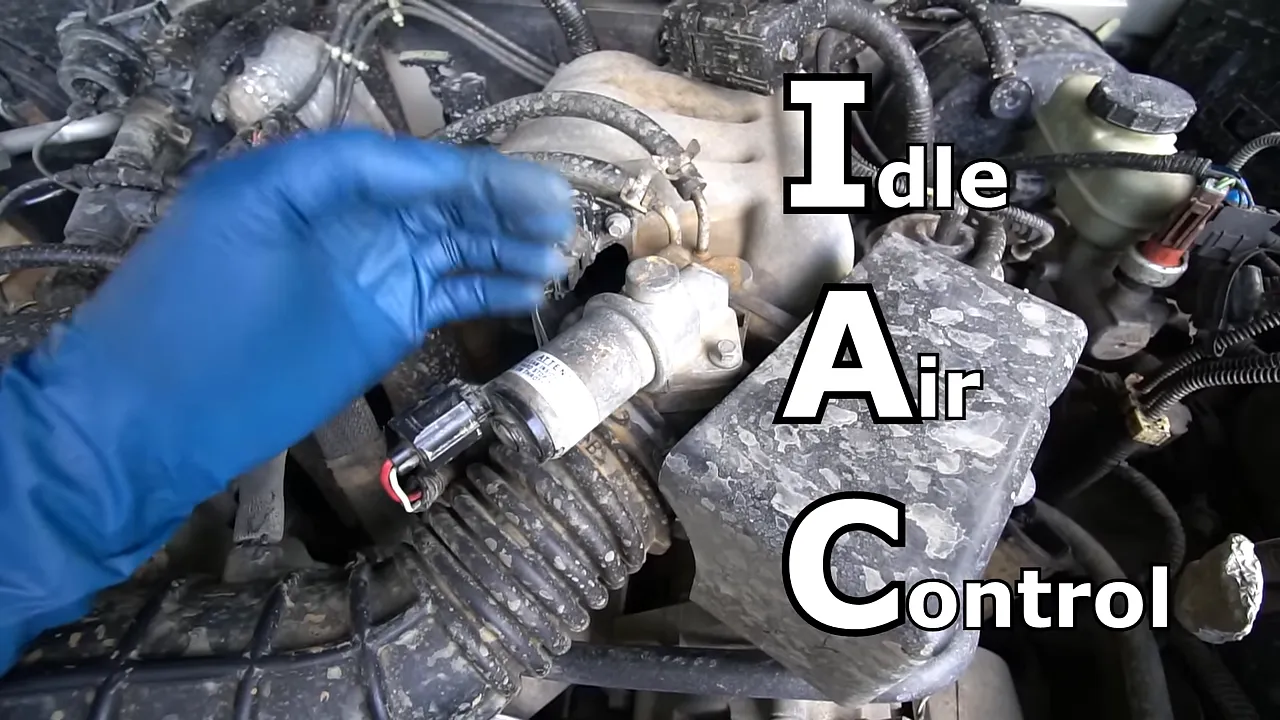
On my pickup, the valve is easy to reach near the throttle body. The Mustang's valve is also accessible, but a couple of hoses need to come off to reach the mounting bolts.
Electronic throttle bodies usually do not need a separate IAC
Before searching all over the engine bay, check the throttle arrangement. A cable-operated throttle has a mechanical connection to the accelerator. An electronic throttle body uses a motor controlled by an electrical signal instead.
On a vehicle with an electronic throttle body, the computer can slightly open the throttle plate to control idle speed. That means it usually does not need a separate IAC valve. My 2014 Maserati is an example of this setup.
If your car has electronic throttle control and no separate IAC valve, this cleaning procedure does not apply. Continue diagnosing the idle issue rather than trying to find a valve that is not there.
How the Idle Air Control Valve Works
I like understanding how a part works before working on it. Here, the basic idea is simple: the engine still needs air when you release the accelerator.
The throttle body's butterfly plate opens when you press the accelerator, allowing more air into the engine. When you let off, the plate returns to its closed position. The IAC provides a controlled bypass route around that plate so the engine can keep running.
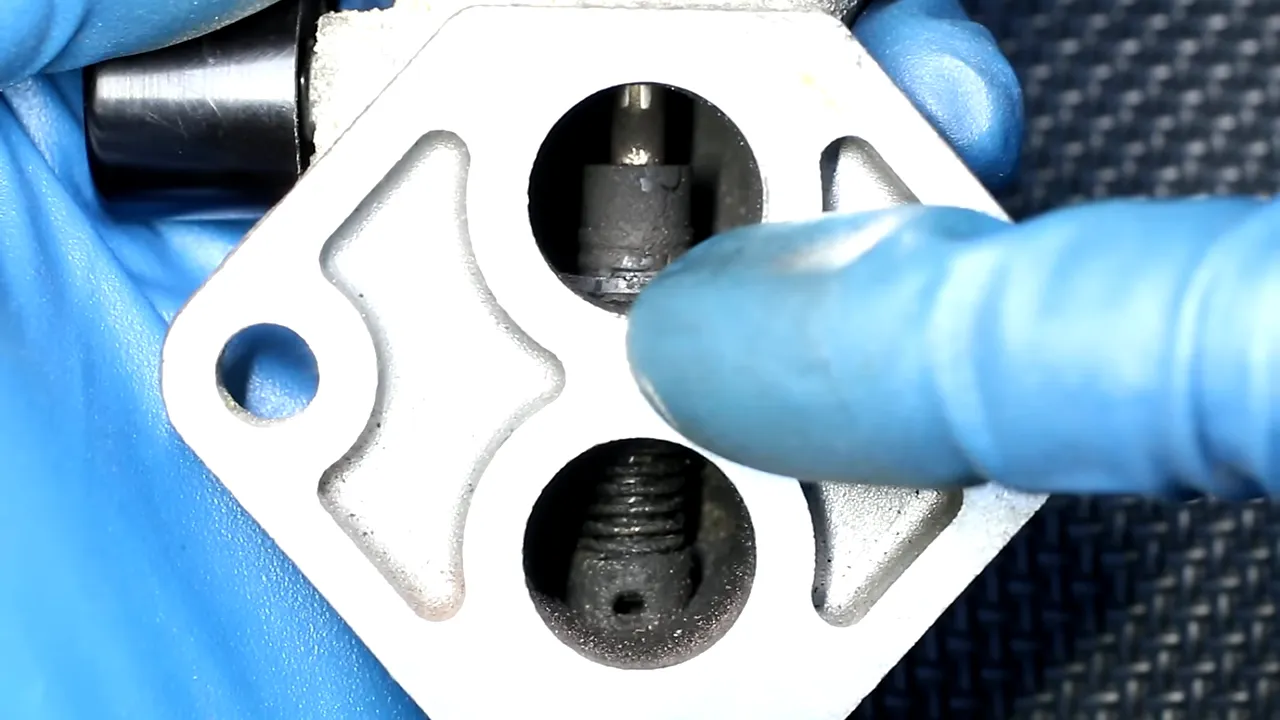
Air enters a passage ahead of the throttle plate, travels through the IAC valve, and exits into the intake behind the plate. The computer adjusts the valve opening to regulate how much air gets through:
- Open the valve farther: Allow more bypass air into the engine.
- Close the valve farther: Reduce bypass airflow.
Carbon can accumulate on the valve and its shaft. Deposits on the valve can keep it from seating completely, while buildup on the shaft can make its movement sticky. Even a valve that does not look terribly dirty can have enough buildup to cause trouble.
Tools and Supplies
You do not need a big collection of tools for this job. Have these ready before removing the valve:
- Safety glasses: Protect your eyes from cleaner and loosened debris.
- Intake or throttle body cleaner: Use a product suitable for the component that dissolves carbon deposits.
- A socket set and ratchet: For the mounting bolts.
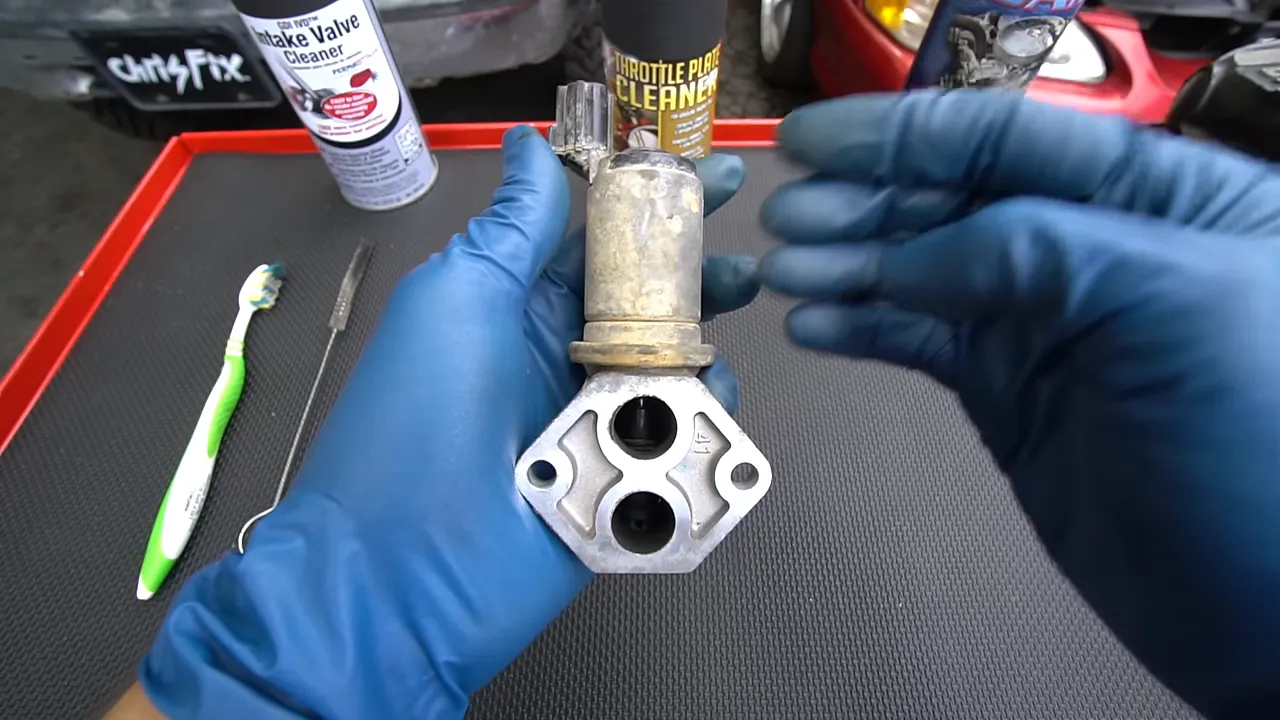
- A small brush, optional: A thin pipe cleaner or toothbrush helps loosen reachable deposits.
- An IAC gasket: Have a replacement available if the old gasket is damaged.
- Tape: To cover the exposed intake opening.
- A catch container and shop towels: To collect the dirty cleaner.
I used throttle body cleaner for this repair. Carburetor cleaner was another option for the valves shown here, but check the product's suitability for your particular component rather than assuming every solvent is interchangeable.
A replacement gasket was only about two dollars for this application. It is inexpensive insurance against an air leak, although an undamaged gasket may be reusable.
Step 1: Remove the Idle Air Control Valve
With the engine off, unplug the valve's electrical connector. On the pickup, removal is simply a matter of taking out two bolts and lifting the valve away from its mounting surface.
- Disconnect the electrical connector.
- Loosen and remove both mounting bolts.
- Lift off the IAC valve, keeping track of the gasket.
- Cover the exposed intake opening with tape so dirt cannot fall into the engine.
The Mustang follows the same basic process, with a little extra work for access. I unplugged the connector and removed the rubber intake hose connected to the IAC. After removing the top bolt, I moved the PCV hose out of the way to reach the bottom bolt.
Once both bolts were out, the valve lifted off. Its gasket came loose as well, so I retrieved it before covering the intake opening.
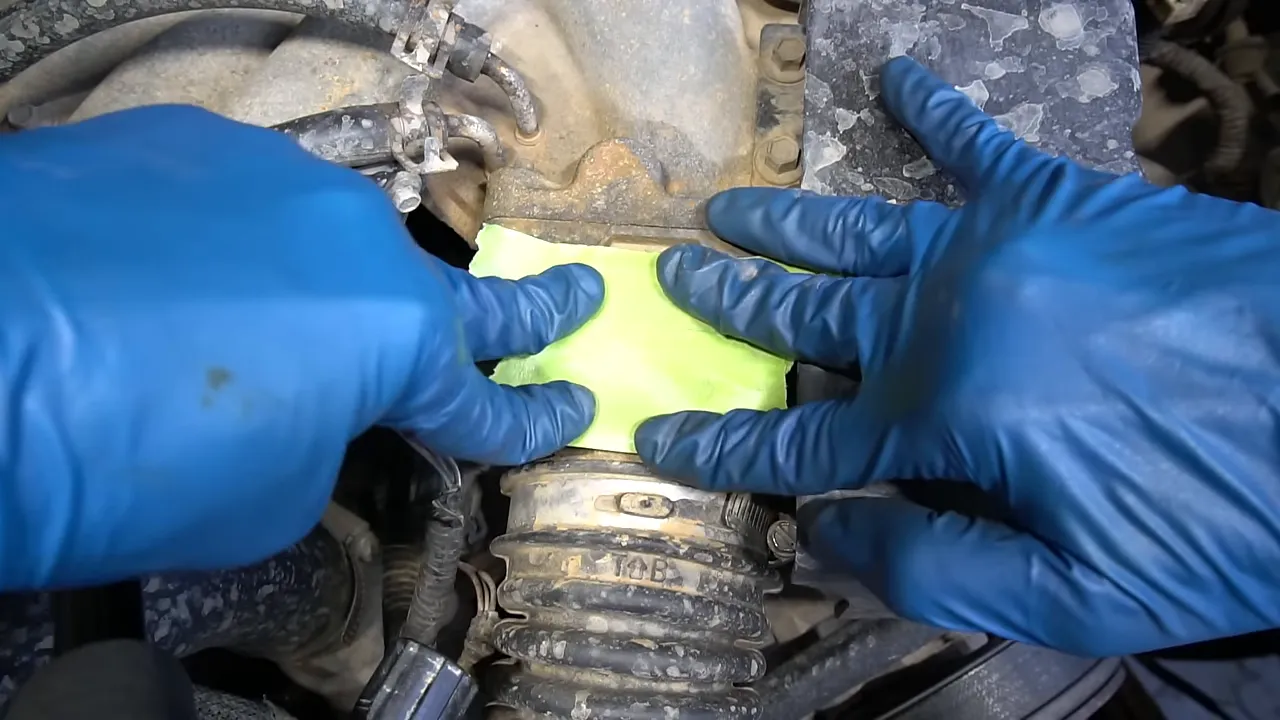
Do not leave the intake opening exposed while you clean the valve. Keeping debris out is much easier than dealing with dirt that has fallen into the engine.
Step 2: Inspect the Valve Before Cleaning
Look inside the air passages for dark carbon deposits, especially around the valve and its shaft.
The pickup's valve did not look heavily clogged, but it was sticking in the closed position. That matched the symptoms: the engine revved smoothly with the accelerator pressed, then struggled as soon as it had to rely on idle airflow.
The Mustang's valve had a different passage layout. Air entered through a hose connection and exited through the mounting face. Deposits on its shaft were a possible reason it was sticking open and keeping the idle high.
The takeaway is simple: do not judge the valve only by how dirty it looks. A modest amount of buildup in the wrong spot can still affect its operation.
Step 3: Clean the IAC Without Damaging the Motor
The most important part of cleaning these valves is their orientation.
Keep the motor end above the valve passages while spraying. If you hold it with the motor below the passages, cleaner can run down the shaft toward the motor and damage it. Keep the electrical portion out of the spray and let the dirty cleaner drain away from it.
Spray, gently brush, and flush
Hold the valve over a catch container. I also used a small glass jar to collect the runoff so I could see how much carbon came out.
- Spray cleaner into the valve's air passages.
- Use the spray pressure to loosen deposits and flush them out.
- Gently clean reachable surfaces with a thin pipe cleaner or small brush.
- Work around the accessible valve surfaces and passages.
- Give everything a final spray to carry away the loosened carbon.
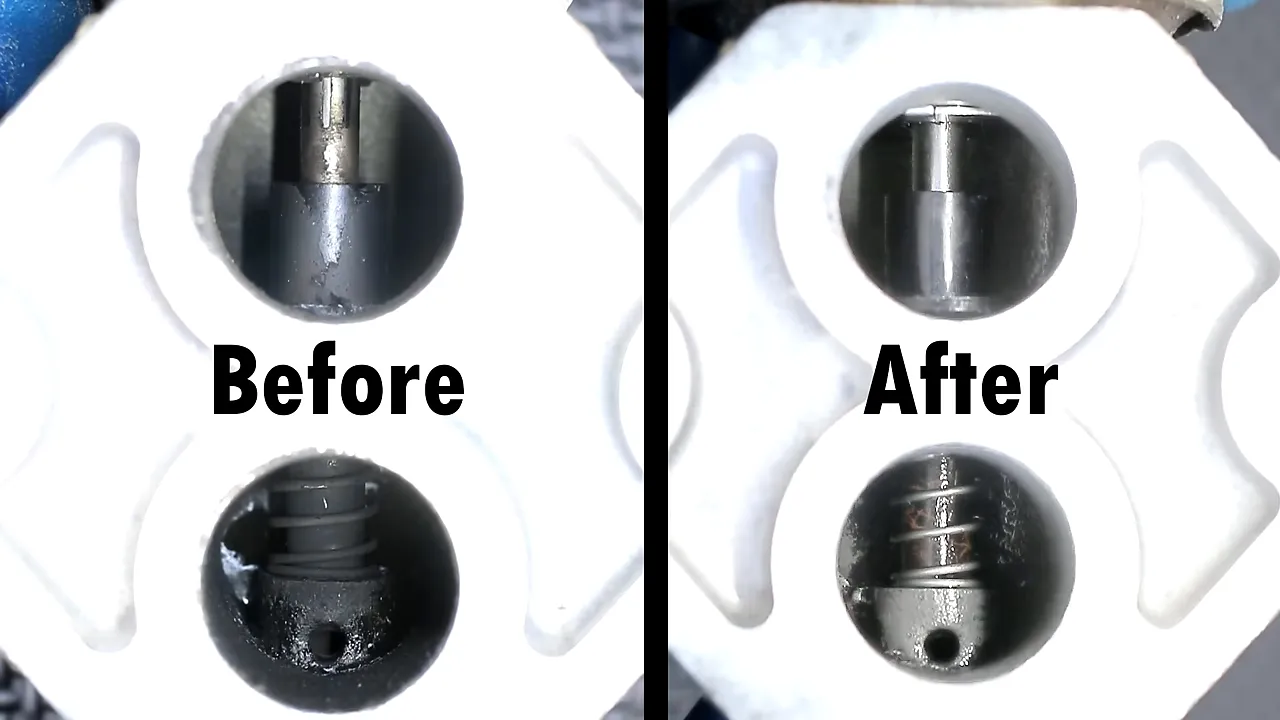
The cleaner started clear and drained out dark. That was the carbon coming out of the valve. The brush helped agitate deposits that the spray alone did not immediately remove.
Can you clean it without a brush?
Yes, spraying alone can help. To demonstrate that, I cleaned the Mustang's valve without using a toothbrush or pipe cleaner.
I sprayed through its accessible passages from different angles, keeping the motor end elevated. The cleaner dissolved deposits, and the spray pressure carried out loose carbon. The runoff contained visible specks of carbon, and the passage was noticeably cleaner afterward.
The brushed valve ended up a little cleaner, but both valves worked properly after reinstallation. A small brush is helpful, not essential to the method demonstrated here.
Collect the used solvent rather than letting it run onto the ground. For disposal guidance, check your local requirements or the EPA's information on household hazardous waste.
Step 4: Inspect the Gasket and Reinstall the Valve
Before putting the valve back, inspect its gasket. Look for cracks, tears, damage, or anything that could prevent it from sealing. Both of my gaskets looked good, so I reused them.
Check that the mating surfaces are clean and smooth, too. Leftover gasket material or corrosion can interfere with the seal. For the surfaces shown here, 800-grit sandpaper can help clean up residue if needed, but neither required it. Keep any sanding debris out of the intake.
- Remove the protective tape from the intake opening.
- Align the gasket with the mounting holes and air passages.
- Position the IAC valve over the gasket.
- Start both bolts by hand to avoid cross-threading.
- Tighten the bolts gradually, alternating between them so the gasket compresses evenly.
- Reconnect any hoses removed for access.
- Push the electrical connector into place until it clicks.
Do not overtighten the bolts. On these vehicles, they thread into aluminum, which can strip easily. Use the specified torque for your application rather than adding extra force.
On the Mustang, I reconnected the PCV hose, the IAC intake hose, and finally the electrical connector. Double-check all of those connections before starting the engine.
Step 5: Start the Engine and Check the Idle
Now comes the moment of truth. Start the engine and allow the idle to settle rather than judging it in the first few seconds.
A cold engine may initially idle above 1,000 RPM. On both of these vehicles, the speed gradually came down over the next couple of minutes.
- Pickup before cleaning: Below about 500 RPM, with shaking and near-stalling.
- Pickup after cleaning: Settled around 800 RPM after roughly two minutes.
- Mustang before cleaning: Stayed around 1,400 to 1,500 RPM, even warm.
- Mustang after cleaning: Started around 1,400 RPM cold, then settled around 800 to 900 RPM after roughly two minutes.

Both engines idled smoothly after cleaning. The pickup no longer struggled to stay running, and the Mustang finally dropped out of its persistent high idle.
If Cleaning Does Not Fix the Rough Idle
Cleaning an accessible, dirty IAC valve is a simple repair worth considering when the symptoms fit. It fixed two very different idle problems here without replacing either valve.
But if your engine still idles poorly, keep diagnosing. A vacuum leak or an EGR leak may be responsible instead. Also recheck the gasket, hoses, and connector you disturbed during the repair so you are not chasing a problem introduced during reassembly.
The important details are straightforward: confirm your car has an IAC valve, keep dirt out of the intake, keep cleaner away from the motor, and reinstall everything with a good seal. Then give the engine time to settle and compare the result with how it ran before.


