A great gift for a car guy or car girl should do something useful. Not another mug. Not a scented candle. Something that makes a repair easier, keeps the toolbox organized, or helps a favorite car look incredible.
For my fifth annual Christmas gift list, I picked five main gift ideas, plus related stocking stuffers that cost less but still earn their place in the garage. These are products I personally use and like, and each one solves a problem I have run into working on cars with common tools in my driveway.
There are no exact prices here, because those change. Instead, the goal is to help you understand what each tool does, why it is useful, and what to check before buying it for somebody else.
Table of Contents
- 1. A DIY Ceramic Coating Kit for the Car-Care Enthusiast
- 2. Jack Stands That Use the Same Point as the Floor Jack
- 3. A Cordless Right-Angle Impact Tool for Tight Spaces
- 4. Ratcheting Wrenches That Save Time and Fit Where Sockets Will Not
- 5. Magnetic Toolbox Holders That Keep Supplies Within Reach
- Pick the Gift That Solves Their Everyday Garage Problem
1. A DIY Ceramic Coating Kit for the Car-Care Enthusiast
A ceramic coating kit is a great gift for somebody who enjoys detailing. You can pay a professional to apply a coating, but doing it yourself is an option, too. The AvalonKing ceramic coating kit I used includes instructions, gloves, the coating, an applicator sponge and cloth, and a soft microfiber towel for buffing.
That gives you the coating and application supplies. The important thing to understand is that most of the work is in preparing the paint, not applying the coating.
How I prepared and coated the paint
My mom’s Mercury Milan was a perfect example. The paint was seriously dirty, so it needed more than a quick wipe before applying anything.
- Wash the car. I rinsed the paint with a pressure washer, washed it with soapy water to remove the dirt, and rinsed it again.
- Check for embedded contamination. The paint looked clean but still felt gritty. I lubricated the surface with soapy water and used a clay bar to remove the contamination, then rinsed again.
- Polish the panel. Claying can leave fine marks. I polished the entire panel by hand and buffed off the residue.
- Remove remaining oils. In this application, I used an isopropyl alcohol wipe to prepare the surface for bonding. Follow the coating manufacturer’s current surface-preparation instructions for your product.
- Apply the coating. I wrapped the applicator cloth around the sponge, added about 10 to 12 drops to saturate it, and wiped the coating onto the paint in overlapping back-and-forth passes.
- Wait, then buff lightly. For this kit and application, I waited about five minutes before gently buffing the panel smooth with a soft microfiber towel and almost no pressure.
The application itself really is straightforward. Once the paint is properly prepared, spreading the coating and buffing it off is the easy part.
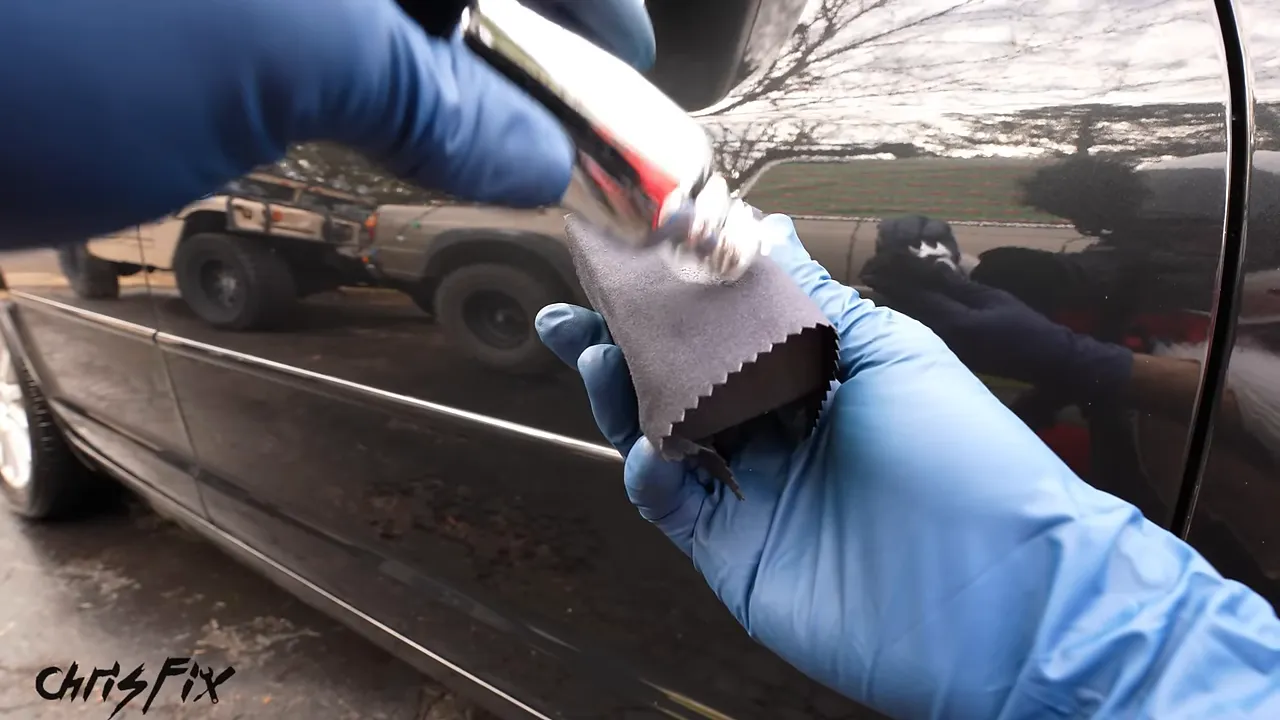
After application, I let the coating cure for 24 hours without getting the car wet or driving it around. Application, flash, and cure times are product-specific, so use the instructions supplied with the kit rather than treating those times as universal.
For the coating I used, I expected at least a year of protection, with two to three years being the longer-term expectation. That is not a guarantee for every car or every set of conditions.
What difference did it make?
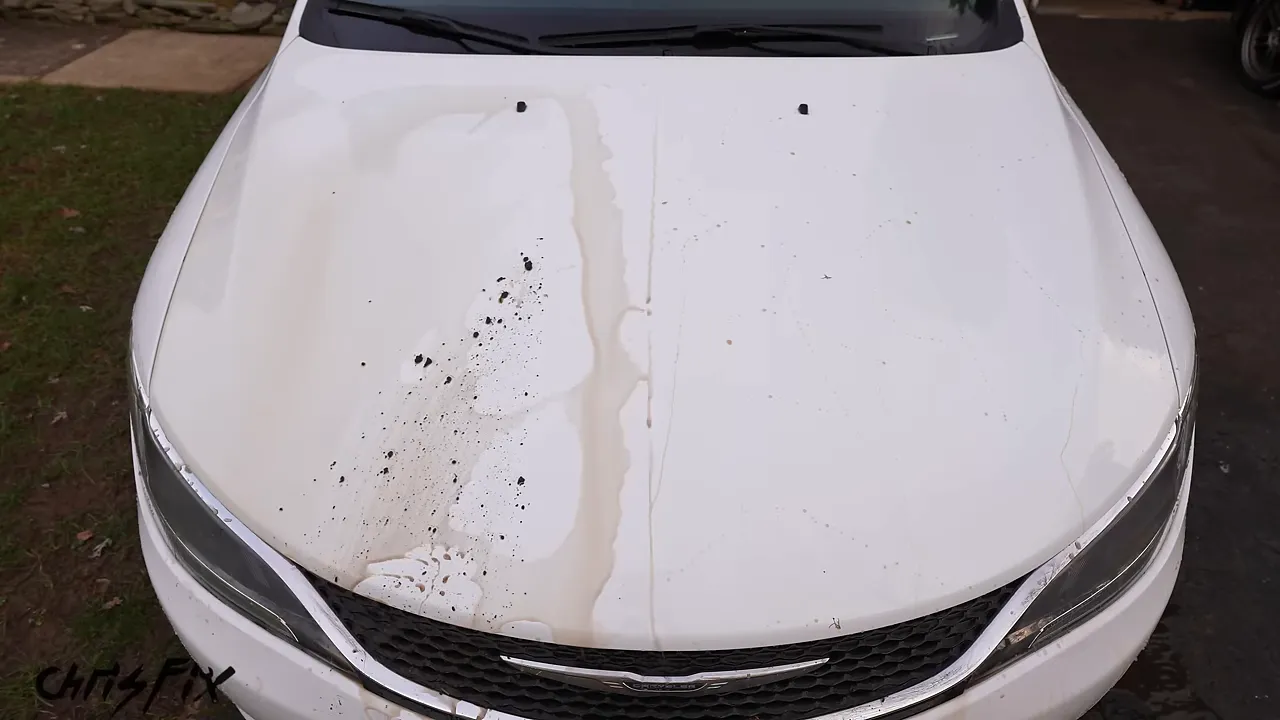
The Milan went from dirty paint to a deep, reflective shine. But the more interesting test was on a white car, where I coated one half of the hood and left the other half uncoated.
Then I did something I really did not want to do: I dumped muddy water over a clean hood.
On the right side, the coated half, the water rolled off and carried much of the dirt with it. On the left, more dirty water and residue stayed on the surface. The difference was much easier to see than I expected.
I also used the coating on faded plastic mirror trim on the TrailBlazer, where it made a noticeable visual difference. And after testing it on a fiberglass boat hull for a season, it was still beading water when the wax on other boats had stopped doing so. Those are useful examples of its versatility, provided the product is approved for the surface you want to treat.
Stocking stuffer: an undercarriage pressure washer attachment
An undercarriage washer attachment is a useful smaller gift for somebody who already owns a compatible pressure washer. It connects to the wand’s quick connector and sends four jets of water upward while you roll it underneath the vehicle.
This is especially handy for:
- Cleaning mud off a truck after off-roading.
- Washing dirt and gravel-road buildup from the chassis.
- Rinsing road-salt residue from underneath the car after winter.
The included extensions made it easier to reach across the underside of my truck. You supply the direction, and the pressure washer does the work. After just a few minutes, the amount of dirt on the driveway made it pretty obvious why this attachment made the list.
Check before buying: the recipient needs a pressure washer, and the attachment must match its connection and operating requirements.
2. Jack Stands That Use the Same Point as the Floor Jack
Here is a problem almost everybody who works in a driveway has run into: you lift the car at a suitable jacking point, then discover that the floor jack is occupying the space where the jack stand needs to go.
You can work around it, but it is a hassle. These Rennstand jack stands approach the problem differently. The top support separates from the legs, so you can lift the support with the floor jack and install the legs afterward.
How the removable-leg design works
- Remove the retaining pins and separate the top support from the legs.
- Place the top support on a compatible floor jack.
- Align the correct adapter with the vehicle’s approved lifting point.
- Raise the vehicle to the required height.
- Install both legs and fully insert the retaining pins.
- Lower the jack until the stand supports the vehicle.
The clever part is that the lifting point and support point are the same location. You are essentially jacking up the jack stand.
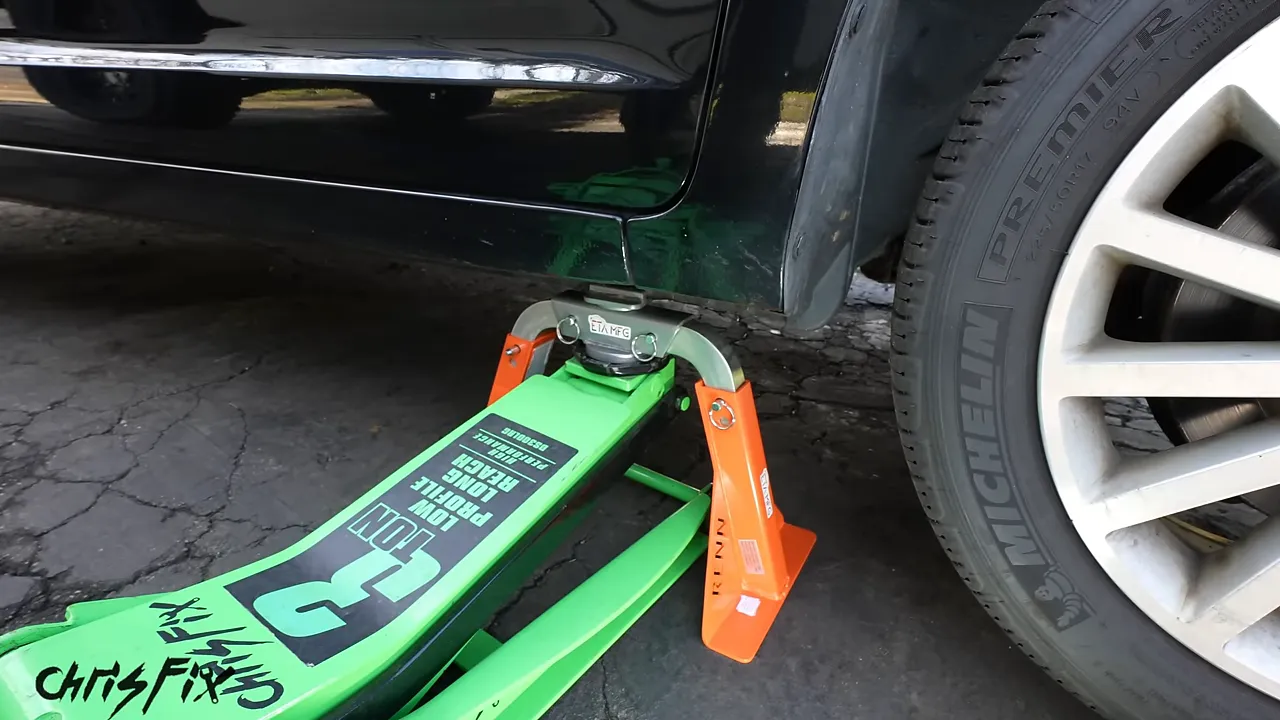
To lower the car, the process is reversed: raise the support with the jack, remove the legs, and lower the vehicle.
I used the pinch-weld adapter in this example. Other adapters shown included a frame adapter and vehicle-specific options for certain Corvettes and Teslas. That makes fitment an important part of choosing this gift. Do not assume the same adapter is suitable for every vehicle.
Other features worth checking
- Broad feet: these spread the load over more surface area than the narrow edges on some conventional stands, making them less likely to dig into the driveway.
- Adjustable height: the stands shown adjust from approximately 12 inches to 16 inches.
- Driveway usefulness: the design addresses a real inconvenience when you do not have a vehicle lift.
Broad feet are not a substitute for a suitable working surface. Always follow the vehicle and equipment instructions, verify load ratings and compatibility, and never get underneath a vehicle supported only by a jack. For additional lifting-safety context, OSHA’s jack safety requirements emphasize firm foundations, rated capacity, and securing a raised load.
Stocking stuffers: rubber wheel chocks and jack pads
Rubber wheel chocks are simple, but useful. Before lifting a vehicle, you need to keep it from rolling. Compared with a random piece of wood, the angled rubber chocks shown fit the tire better and provide a grippier contact surface.
Rubber jack pads solve a different problem. A bare metal jack saddle can scratch the vehicle’s lifting surface. A properly fitted rubber pad creates a protective layer between the two surfaces and adds grip.
Neither item is flashy. Both are the kind of inexpensive garage accessory that gets used repeatedly. Make sure the pad fits the jack and is appropriate for the vehicle’s lifting point.
3. A Cordless Right-Angle Impact Tool for Tight Spaces
A full-size impact wrench is awesome when you need power. It can also be large, heavy, and awkward around brake and suspension parts.
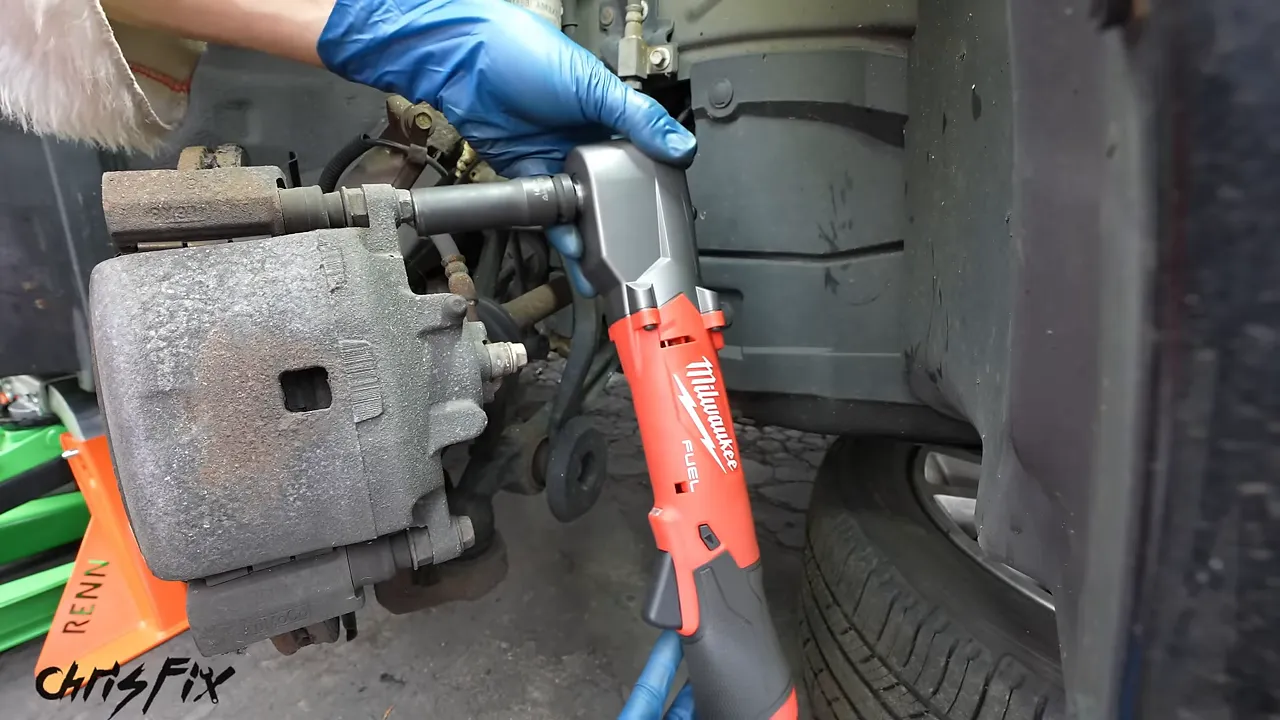
The cordless right-angle impact tool shown here, which I referred to as an electric impact ratchet, fills that gap. It has a slimmer layout that reaches fasteners a bulky impact gun cannot comfortably access.
Buy into the right battery platform
Before buying any cordless tool as a gift, find out which battery system the recipient already uses.
A bare tool can be reasonably priced, but adding lithium-ion batteries and chargers pushes the cost up. Staying within a compatible battery platform allows batteries to be shared between tools.
Check the exact battery family, not just the brand name. The useful part is compatibility, not simply having the same logo on every tool.
Power versus access
To get a feel for its strength, I tried it on lug nuts. It initially struggled where the larger impact wrench had no problem, although another attempt did remove some of them. That is a good illustration of its role: useful power in a compact shape, not a complete replacement for a bigger impact wrench.
The tool shown was rated at 200 foot-pounds of torque. Around the brake assembly, its real advantage was access. A large impact gun crowded the work area and left little room for a long bolt to back out. The right-angle tool fit in several positions much more easily.
Two other features made it especially useful:
- A battery gauge: a light press of the trigger displayed the remaining charge.
- Three operating settings: these allowed different levels of output, including a lower setting that stopped after snugging the demonstrated fastener.
That lower setting is handy during assembly, but it does not replace proper final tightening. I snugged the fastener with the power tool, then used a torque wrench to finish it to specification.
Stocking stuffer: a precision screwdriver set
A precision screwdriver set is useful far beyond the car. I demonstrated it on the small screws in an LED flashlight, but the appeal is having the correct bit for little fasteners that ordinary screwdrivers do not fit.
The set shown included:
- Security Torx, tri-point, and pentalobe bits.
- Square, Phillips, flathead, triangle, and JIS bits.
- Hex bits, small nut drivers, and a SIM-card ejector.
The lightweight aluminum handle has a rotating end cap. Rest that cap against your palm and turn the shaft with your fingers, keeping pressure on the screw while working one-handed. Magnetic bits also make those tiny screws easier to control.
4. Ratcheting Wrenches That Save Time and Fit Where Sockets Will Not
Anybody who works on cars should seriously consider a set of ratcheting wrenches.
With a conventional wrench, you turn the fastener, lift the wrench off, reposition it, and repeat. A ratcheting wrench stays on the fastener while you move the handle back and forth. That makes a repetitive job quicker and much less annoying.
They also fit places where a socket and ratchet are simply too thick. At a lower control-arm bushing, I could slide a ratcheting wrench into a gap that would not accept the regular ratchet. I did not loosen that bolt because it did not need to come out. It was just a clear example of the access advantage.
Choosing between a mixed set and a complete metric set
I compared two sets: a less-expensive SAE and metric ratcheting wrench set and a more-expensive Teng Tools metric set in a foam tray.
Both sets shown had 12-point ends, 72-tooth ratcheting mechanisms, and lifetime warranties. The meaningful differences were finish, size coverage, and storage.
- The mixed SAE/metric set: useful if the recipient needs both measurement systems. Its chrome finish was more slippery with oily hands, and the metric selection skipped sizes. The displayed sequence started at 6, 8, 10, and 12 millimeters.
- The complete metric set: included every size from 8 through 19 millimeters. Its satin finish provided better grip when oily, and the labeled foam tray kept the tools organized.
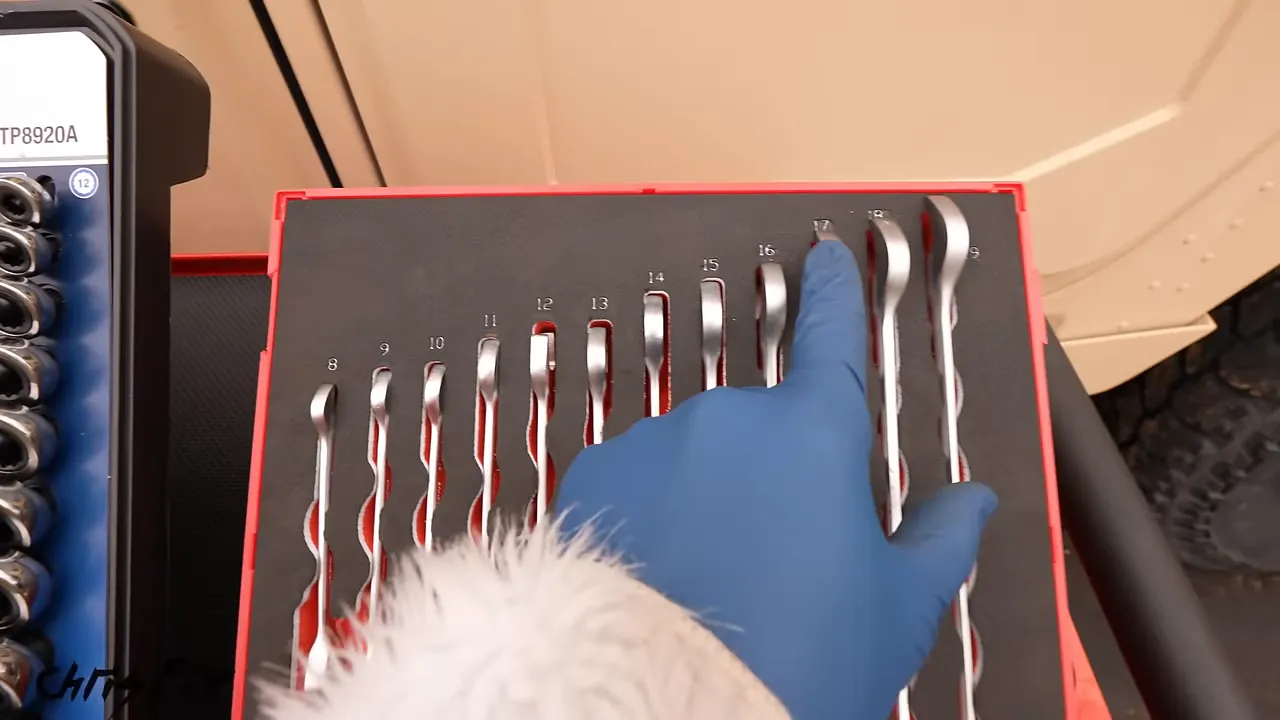
Skipped sizes may not matter every day, but they matter a lot when the fastener in front of you needs the one wrench you do not own.
Storage matters, too. The plastic display packaging on the less-expensive set was not a practical carrying case. Once opened, it did not securely retain the tools. The foam tray, by contrast, gave each wrench a home and made missing tools obvious.
Neither approach is automatically wrong. Choose based on the recipient’s vehicles, existing tools, and storage setup.
Stocking stuffers: a ratcheting breaker-bar adapter or breaker bar
I love breaker bars. Extra leverage makes stubborn fasteners much easier to loosen. But a conventional breaker bar does not ratchet, which can leave the handle at an awkward angle.
For example, with a socket on a lug nut, the handle may point down toward the ground. You then have to remove and reposition it, hoping the next available angle gives you enough working room. Under a car, surrounding parts can make that even more frustrating.
A ratcheting breaker-bar adapter fits between the breaker bar and socket. It adds a ratcheting mechanism so you can choose a useful handle position, break the fastener loose, and continue turning it without repeatedly removing the socket.
If the recipient does not already have a breaker bar, a ratcheting breaker bar combines those functions in one tool. The version shown also had a swiveling head for different working angles.
It is a small change that makes a familiar tool much more convenient. As with any high-leverage tool, stay within the equipment’s intended use and ratings.
5. Magnetic Toolbox Holders That Keep Supplies Within Reach
The final main gift idea is really a family of useful accessories: magnetic holders for a metal toolbox or tool cart.
Instead of piling everything on top of the cart or leaving tools in the engine bay, these holders give frequently used supplies their own place.
- Paper towel holder: keeps a roll ready on the side of the toolbox.
- Glove-box holder: puts disposable gloves within easy reach.
- Spray-can holder: stores items such as brake cleaner and a funnel, with additional screwdriver openings.
- Magnetic tool tray: creates a convenient place for the tools currently being used.
The holders shown used rubber-coated magnets, and the tray also had a protected contact area to help avoid scratching the toolbox finish.
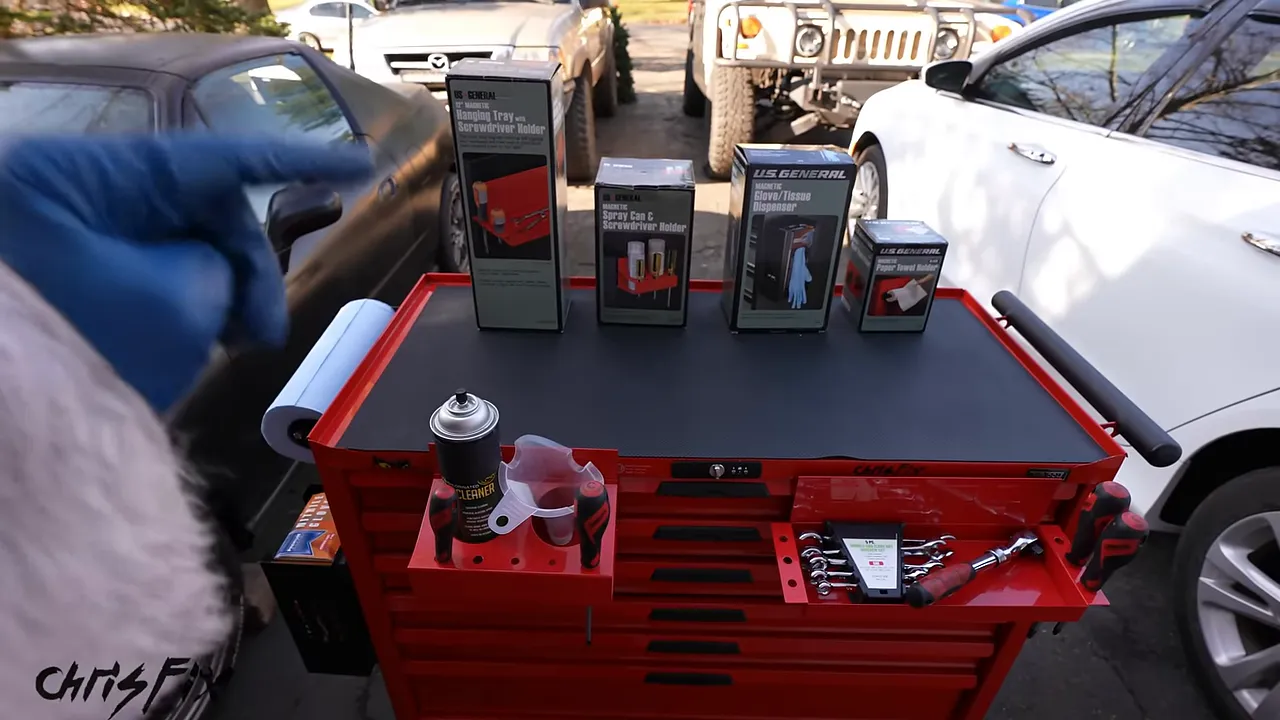
One small detail matters with the spray-can holder: a screwdriver needs to pass through both the upper and lower guide holes. A stubby screwdriver that only reaches the top hole can tip or pop out when the cart moves. A longer screwdriver passing through both holes stays much more securely located.
Stocking stuffer: an extendable magnetic pickup tool
You reach for a bolt, knock it into the engine bay, and hear it land somewhere deep inside. Of course, it does not fall all the way through to the ground. That would be too easy.
An extendable magnetic pickup tool can save a lot of aggravation. In my example, the bolt landed near the radiator, where reaching in by hand was difficult and risked damaging the fins. The telescoping magnet reached down and pulled it straight out.
The kit shown included a small pen-style magnet and a larger version with a light. The light was bright enough to be useful even during the day, especially when reaching into dark spaces.
It also came in a foam-lined case, although the smaller magnet did not have its own cutout. That is an easy storage detail to improve by cutting a matching recess in the foam.
Stocking stuffers: magnetic socket holders
I like foam tool organizers because everything stays in its place and an empty slot immediately tells you something is missing. But if your tools did not come with fitted foam, magnetic organizers are another good option.
The labeled magnetic socket holders shown were available for 1/4-inch, 3/8-inch, and 1/2-inch drive sockets, with separate positions for deep and shallow sockets.
The labels were clear, and the holder shown did not skip sizes. It even included a position for a 4.5-millimeter deep socket that I did not own yet. The magnets held the loaded sockets securely enough that I could turn the organizer upside down and shake it without them falling out.
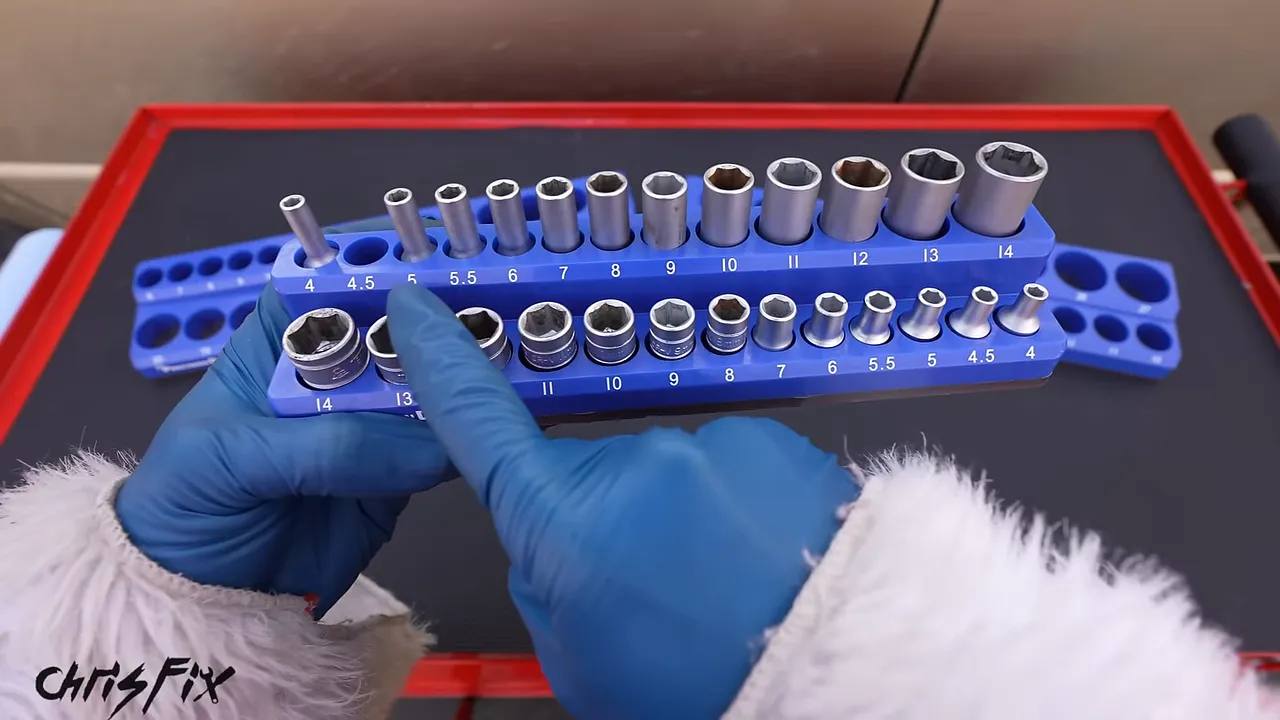
Check drawer clearance before buying. The upright deep sockets prevented the shallow toolbox drawer from closing. That organizer worked better in a taller drawer or mounted on the side of the toolbox.
A low-profile magnetic socket holder was the better option for the narrow drawer. The version shown did not have size labels, but those could be added with a marker. Sockets were also much easier to insert and remove than on the conventional clip-style socket rail I compared it with.
Stocking stuffers: magnetic wrench and screwdriver holders
A magnetic wrench holder is a useful answer to the storage problem with the ratcheting wrench set. Each wrench gets its own position, and the holder mounts to the toolbox.
The matching magnetic screwdriver holder also worked well, with one preference: I would put the screwdrivers in the upper positions rather than hanging them underneath.
The lower arrangement held reasonably well during a shake test, but a screwdriver can occasionally work loose. Using the upper positions, with handles staggered as needed, was the arrangement I preferred.
Pick the Gift That Solves Their Everyday Garage Problem
The best car-tool gift does not have to be the largest or most expensive thing on the list. It should match what the person actually does.
- For the detailing enthusiast: a ceramic coating kit, or an undercarriage washer if they already have a compatible pressure washer.
- For the driveway mechanic: compatible jack stands, wheel chocks, and protective jack pads.
- For somebody building a cordless collection: a compact right-angle impact tool that uses their existing battery platform.
- For the person constantly working in tight spaces: a well-chosen ratcheting wrench set or breaker-bar ratchet adapter.
- For the person with a crowded toolbox: magnetic holders, socket organizers, and a pickup magnet.
These are the gifts that make the next job easier, whether that means reaching a stubborn bolt, finding the right socket immediately, or keeping a roll of shop towels exactly where you need it. That is what makes a garage gift worth giving.


