The best gift for somebody who works on cars is a tool that solves a problem they know all too well. Not enough light under the hood. A bolt you can reach but cannot loosen. A fluid change that somehow ends up all over the driveway.
For my eighth annual Christmas gift list, I picked five main gifts and five smaller additions that make those jobs easier. These are tools and products I like using, not sponsored selections, and many are things that even a well-stocked toolbox might be missing.
Some are affordable little problem-solvers. Others are bigger gifts worth considering for somebody who spends a lot of time in the garage. And before we get to the tools, there is something for the next generation of car enthusiasts.
Table of Contents
- A Gift for Future Mechanics: Children's Car Maintenance Books
- 1. Rechargeable Neck Lights: Keep Both Hands on the Job
- 2. Wilton Hitch Vise: Bring the Workbench With You
- 3. FLIR Thermal Camera: Find Problems You Cannot See
- 4. Vacuum Fluid Extractor: Less Mess During Maintenance
- 5. Vyper Shop Chairs: A Premium Upgrade You Can Feel
- Choose the Gift That Solves Their Everyday Garage Problem
A Gift for Future Mechanics: Children's Car Maintenance Books
My second children's book, How to Change Oil in a Car, follows a father and son through the basic steps of changing their car's oil. The idea is simple: show kids that cars are not something to be intimidated by, and hopefully get them excited about working on one themselves someday.
It joins How to Change a Flat Tire, which reached number one in children's books and became a number one new release on Amazon after its launch. The pictures and stories families sent me about reading it with their kids were a big part of why I wanted to make another one.
Both books are designed for kids ages 12 and under, although plenty of adults have enjoyed them too. For the 2023 gift list, each was priced at $9.99, with shipping available wherever Amazon offered it. Printing costs had increased, but I kept the price the same, leaving me with less than a dollar per book. The goal was getting kids involved in the car community, not maximizing the profit.
The children's car maintenance books are a fun choice for a young helper who already wants to know what is happening under the hood.
1. Rechargeable Neck Lights: Keep Both Hands on the Job
Holding a flashlight while trying to work on a car gets old quickly. A neck light puts the illumination where you need it while leaving both hands free.
My ChrisFix neck light has two independently adjustable lights on a flexible band. Each light can pivot 90 degrees in either direction, so you can aim them at the same area or spread the light across your workspace.
- Full brightness: 300 lumens with about three hours of battery life.
- Dimmed setting: 60 lumens with about nine hours of battery life.
- Controls: A power button on top of each light; hold the button to dim it.
- Power: Rechargeable, rather than dependent on disposable AA batteries.
- Fit: A flexible band that can be worn around your neck or head.
- Warranty: One year, with contact information included on the warranty card.
I worked directly with the American company that owns the patents for these neck lights because I wanted a quality product. The flexible band returns to its shape after bending, although deliberately folding it all the way backward is not something I recommend doing to yours.
Why choose a neck light instead of a headlamp?
The big advantage is that your head stays available for other equipment. You can wear a hat, respirator, construction helmet, or welding helmet without trying to find room for a headlamp too.
With the lights aimed down toward the work, you are also less likely to shine a beam directly into somebody's face when you turn to talk. And if you do want the light to follow your head, this flexible design can be worn like a headlamp.
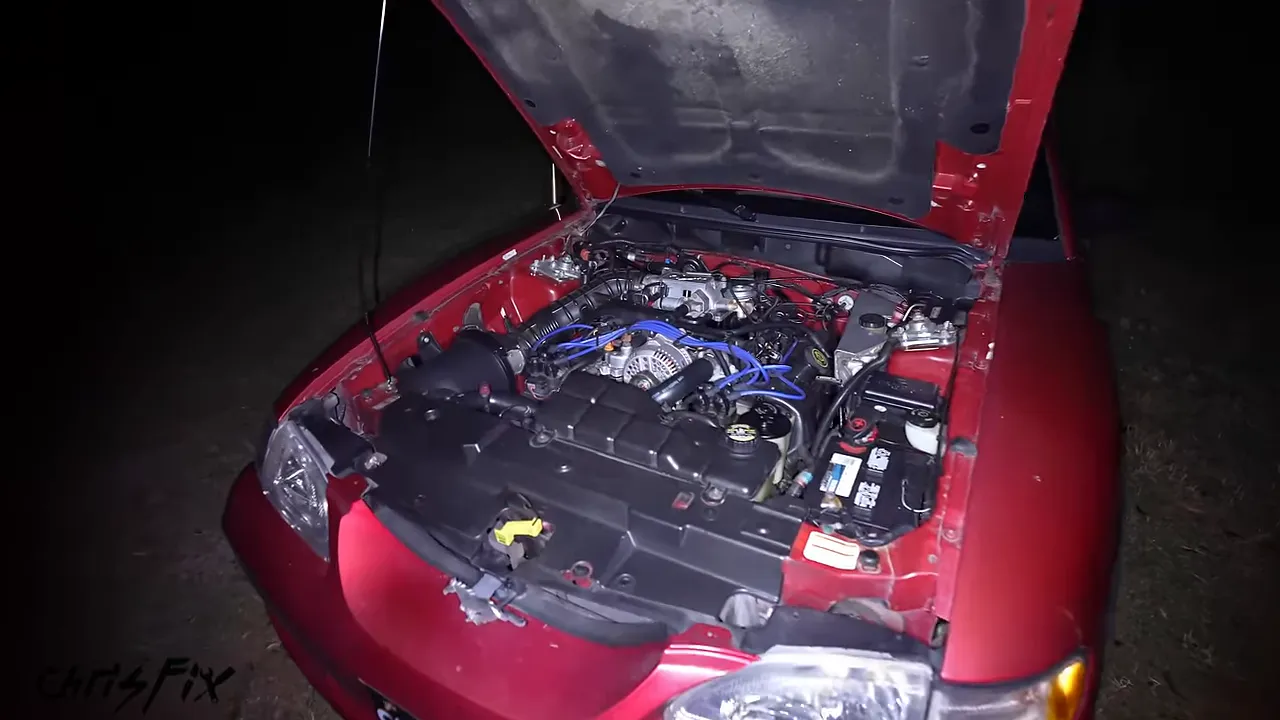
In a pitch-black driveway, with no streetlights or moonlight helping out, the two lights provided plenty of illumination under the hood for checking fluids or working around belts and hoses. They are useful away from the garage too: walking the dog, taking out the trash, or changing a fishing lure at night. I even caught a small bass while testing them. Strictly for research, of course.
How the other neck lights compare
There are good alternatives, and you do not necessarily need the most expensive option.
- The less expensive AA-powered version offers the same general concept, but it is not rechargeable and is not as bright.
- Milwaukee's version produces 400 lumens and runs for about two and a half hours on high. It has a removable rechargeable battery at the back, but its design is intended for neck use rather than head use.
- Snap-on's version has detachable magnetic lights. That is a genuinely useful feature because you can remove a light and attach it elsewhere.
- My version keeps the lights attached, combines rechargeable power with the flexible band, and provides the brightness and runtime options above.
For the 2023 release, I also chose a father-and-son tool store in New Jersey to handle distribution instead of Amazon. Any profit I make from these lights goes to charity, so the idea is to support a small business and a good cause while getting a useful tool into your hands.
|
Smaller Gift: Astro Stick Light With Wireless Charging
Yes, another light. But a wearable light and a magnetic stick light solve different problems, and I use both all the time.
For the Astro stick light with wireless charging, pay attention to the model number: you want the version ending in LC. That is the one that includes the magnetic wireless charging pad.
When you finish a job, stick the light onto the charging base. When you need it again, pull it off. There is no little charging cable to plug and unplug every time.
The base has strong magnets on the back, so it can mount to a suitable metal surface without drilling holes. It also has four screw holes for a permanent mounting location.
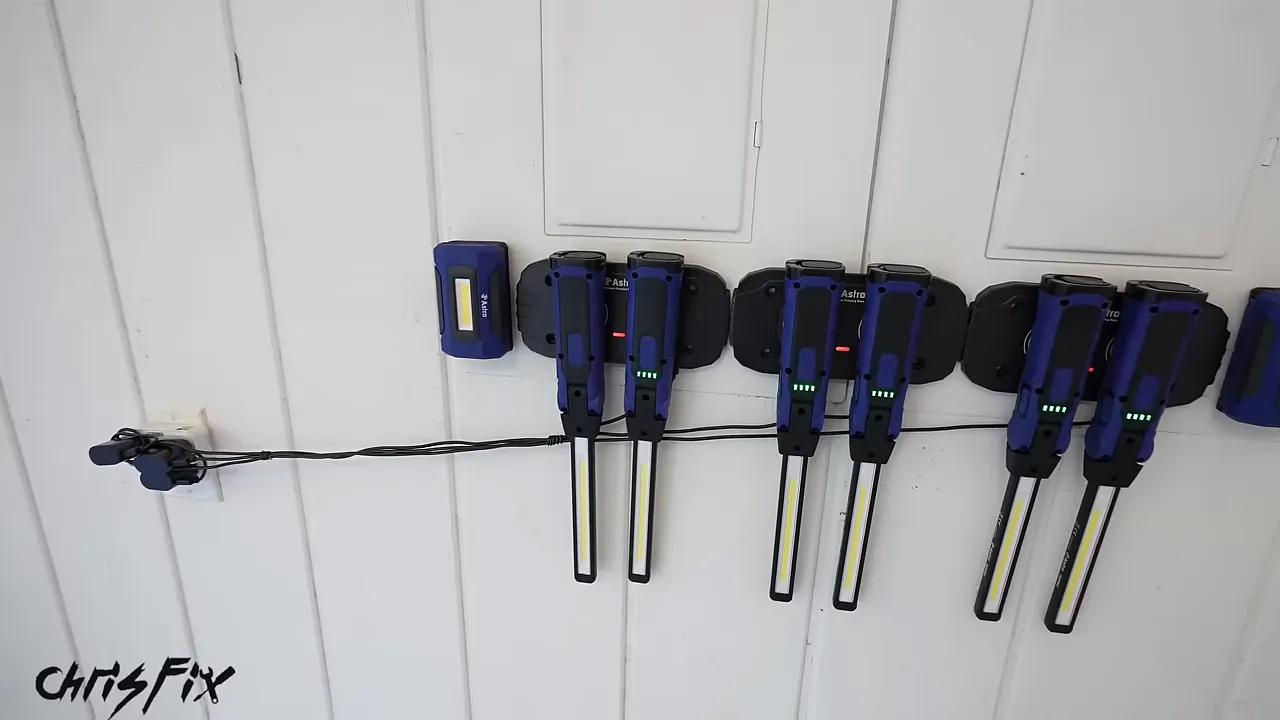
The light itself has a magnetic bottom and a hook for places where a magnet will not help. To give you an idea of the magnet's strength, it lifted a four-pound hammer during my demonstration. It also held the light securely beneath a car's hood.
At night, the output is more impressive than it looks in daylight. It lights up the engine bay and runs for about three hours, with longer runtime available if you dim it. The charging setup is what makes it especially convenient, but the light has to be good too. This one is.
2. Wilton Hitch Vise: Bring the Workbench With You
A hitch vise gives you a solid place to hold parts when you are away from your garage. The Wilton hitch vise slides into a two-inch receiver and includes a pin to secure it.
What made this one stand out to me was the complete package: a well-made vise, thoughtful features, and a carrying case. That last item sounds minor until you need somewhere to put a heavy vise after removing it from the truck.
The details that make it useful
- Wide opening: The jaws open to about 5¾ inches.
- Smooth operation: The handle action and fit feel good.
- Repositionable handle: Pull the handle outward, rotate it to another orientation, and lock it back into place.
- Pipe jaws: Rounded lower jaws grip cylindrical material as well as the upper flat jaws grip flat stock.
- Bumper clearance: The vise sits back far enough to leave working room for sawing.
- Anvil surface: It provides a surface for hammering during suitable tasks.
- Workbench bracket: An included mount lets you use the same vise back in the garage.
The repositionable handle is particularly smart. If a vise handle hangs down behind the vehicle, it can catch an obstacle on a trail. Being able to move it out of the way without loosening the jaws is a useful feature. Always follow the manufacturer's transport instructions rather than assuming a mounted vise is ready for travel.
I used the vise to hold material for sawing and tested the anvil with hammering. The extra clearance behind the bumper gives you space to work without bringing the saw right up against the vehicle.
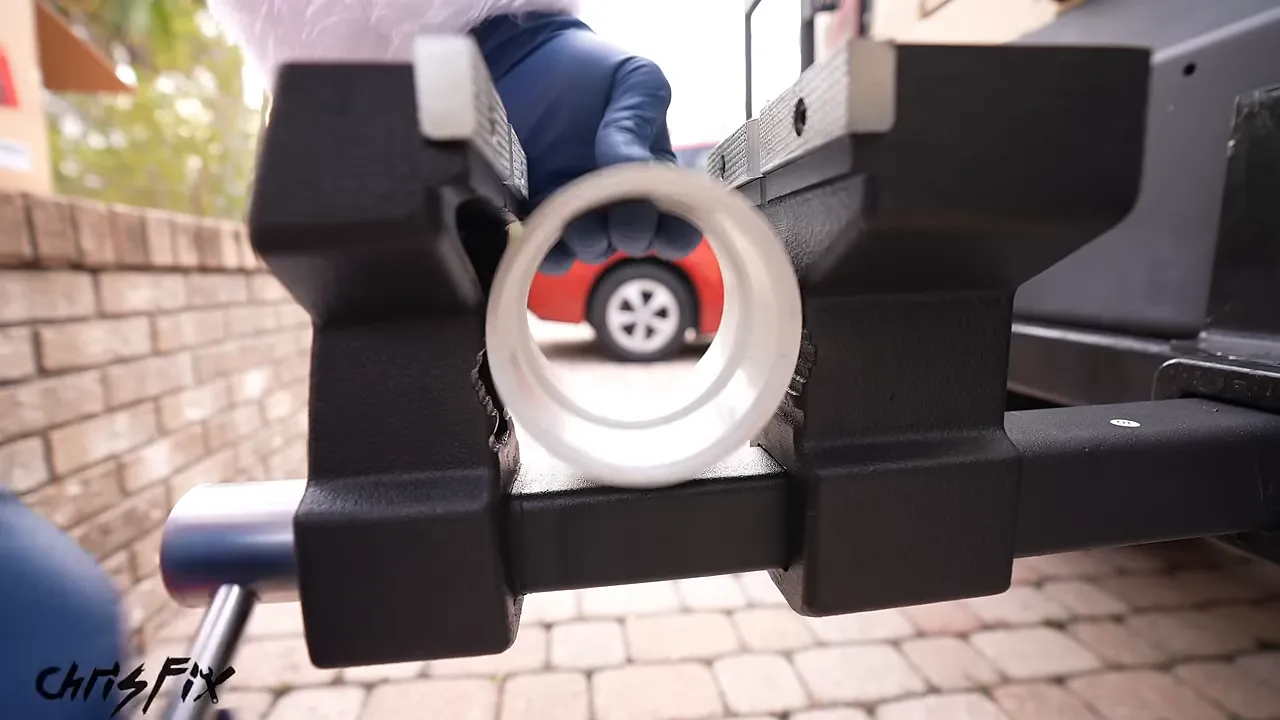
Once the job is done, the vise slides out and goes into its fitted carrying case. It is much easier to stow neatly than a loose, heavy tool, though the case still needs to be secured appropriately in the vehicle.
Is the cheaper hitch vise worth considering?
The lower-cost hitch vise attaches in much the same way and felt comparably secure in the receiver. It is cheaper in both price and construction, though.
The metal is thinner, the powder coating is not as good, and the handle does not lock into a chosen orientation. It also lacks a carrying case. If the budget allows, I prefer the Wilton because those differences affect how pleasant it is to use and store, not just how it looks.
Smaller Gift: Wrench Extenders
A wrench extender is one of those tools you might not think about until a ratchet will not fit and a normal wrench cannot give you enough leverage.
On my old air-conditioning compressor, the fastener was in a space too tight for the ratchet. A thin wrench fit, but its short handle made the bolt difficult to loosen.
A common trick is to hook the box end of another wrench over the open end of the first one. It can work, but the connection can slip. If you have ever punched a nearby piece of metal when that happens, you already know the drawback.
A purpose-built extender engages the wrench more securely and adds leverage. I tried two styles:
- A long wrench extender adds its own handle to the wrench.
- A ratchet-driven wrench extender connects to a ratchet, letting that handle provide the extra leverage.
The second example was a wheel-bearing fastener with an axle obstructing straightforward ratchet access. The wrench fit around the obstruction, and the extender provided the leverage needed to break the fastener loose.
These are affordable tools for specific awkward situations. Make sure everything is fully seated and compatible before applying force, and do not confuse extra leverage with unlimited tool strength.
3. FLIR Thermal Camera: Find Problems You Cannot See
A thermal camera is a seriously cool diagnostic tool. Instead of showing only what you can see with your eyes, it turns temperature differences into an image.
The FLIR One Edge thermal camera uses two cameras: one for visible light and one for infrared. In the palette I used, purple and blue represent cooler areas, while yellow and white indicate hotter areas.
Thermal images alone do not have sharply defined detail, so the camera combines information from both cameras to help make objects easier to identify. There is no built-in display. You connect it wirelessly to a phone and use the app.
Finding a parasitic battery drain
My Del Sol was losing battery power overnight. Something was drawing current while the car sat.
A conventional diagnosis involves measuring current with a multimeter and isolating circuits, often by checking fuses. That is a separate procedure, but the thermal camera gave me a quick clue: one radiator fan relay was noticeably warm.
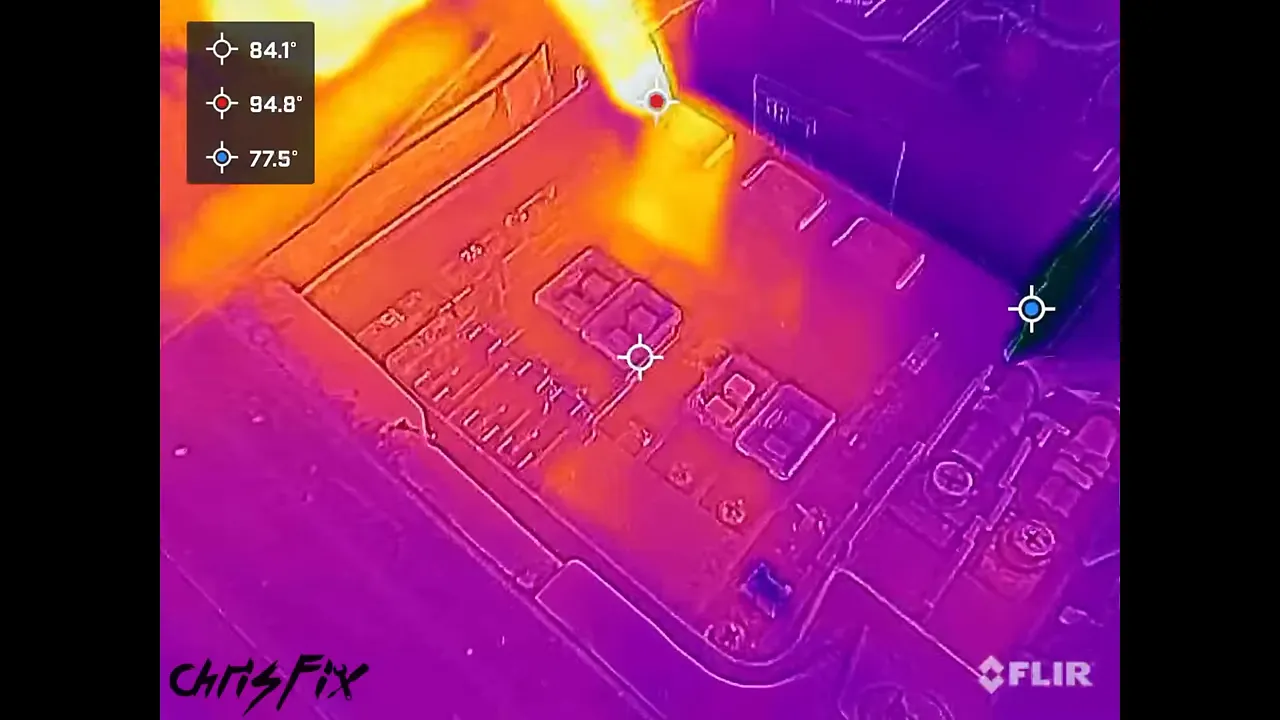
In this case, the faulty relay circuit was drawing enough current to drain the battery without an obviously running radiator fan. The temperature difference made a hidden problem stand out.
The useful lesson is that heat can help you locate an electrical fault. It is a diagnostic clue to investigate, not a reason to assume every warm relay is defective.
Narrowing down an idle misfire
My pickup had a slight miss at idle that disappeared as engine speed increased. The check engine light was not on, and scanning the computer did not identify a cylinder.
I compared the exhaust manifold temperatures near each cylinder. On one bank, cylinders one, two, and three all looked consistently hot. On the other bank, cylinder four's exhaust runner was visibly cooler than those for cylinders five and six.
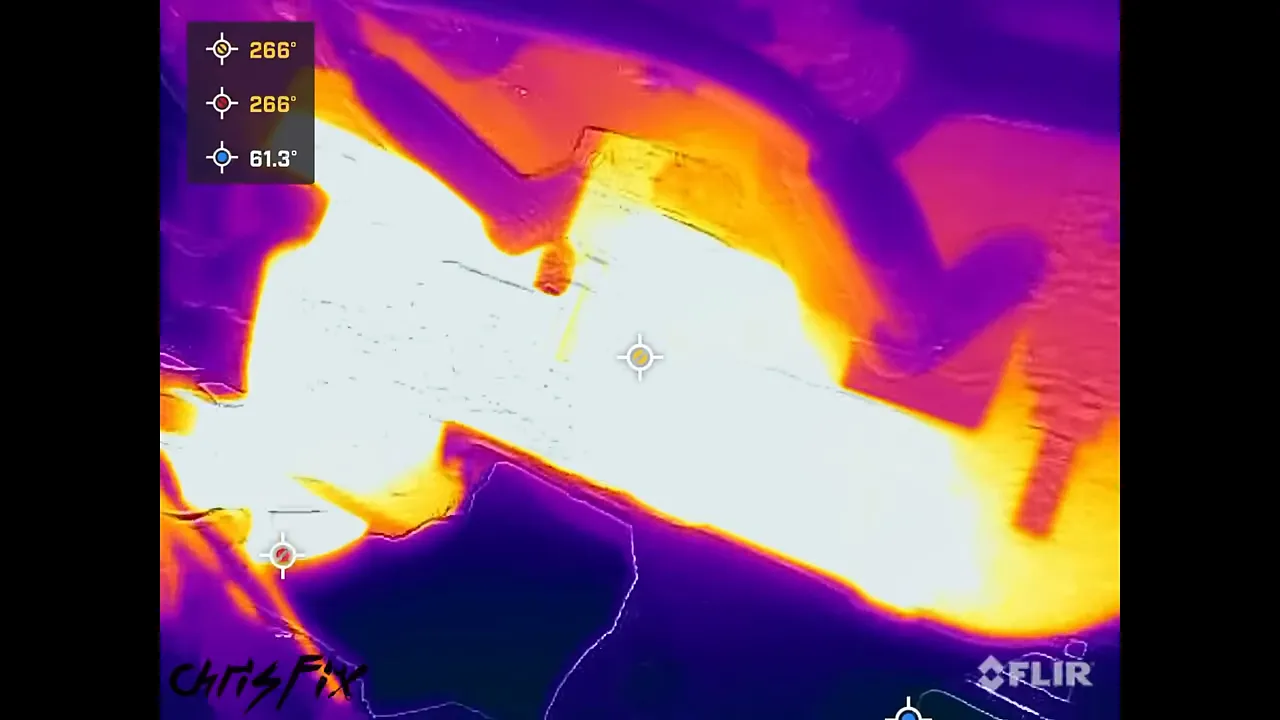
That narrowed down where to investigate. It did not tell me the underlying cause, but it gave me a starting point for checking spark, compression, and timing rather than guessing across the whole engine.
Other thermal camera uses
There are plenty of useful applications beyond those two examples:
- Heated seats: Compare the heating pattern and look for sections that are not warming properly.
- Rear-window defrosters: Look for differences that suggest a heating element is not working.
- Plumbing: Trace temperature patterns that may help locate a blockage or leak.
- Electrical systems: Look for unusually warm areas that warrant further investigation.
- HVAC and insulation: Find temperature differences around equipment or areas losing conditioned air.
Around my HVAC equipment, a cooler area revealed moisture buildup that I had not noticed with my eyes. That gave me a chance to address it before it became a bigger problem. A thermal camera does not see through walls, but surface-temperature patterns can tell you where to look more closely.
Smaller Gift: Craftsman Overdrive Wrenches
The Craftsman Overdrive wrench set has two features I really like: longer handles and gripping surfaces designed to help remove rounded fasteners.
Compared with typical combination wrenches, the Overdrive wrenches are roughly an inch or two longer. That may not sound like much, but every extra inch helps with leverage.
The bigger difference is at the ends:
- Open end: Ridges and a shaped contact area are designed to grip fasteners described as up to 50 percent rounded.
- Box end: A six-point design has ridges on three internal surfaces and is designed for fasteners described as up to 70 percent rounded.
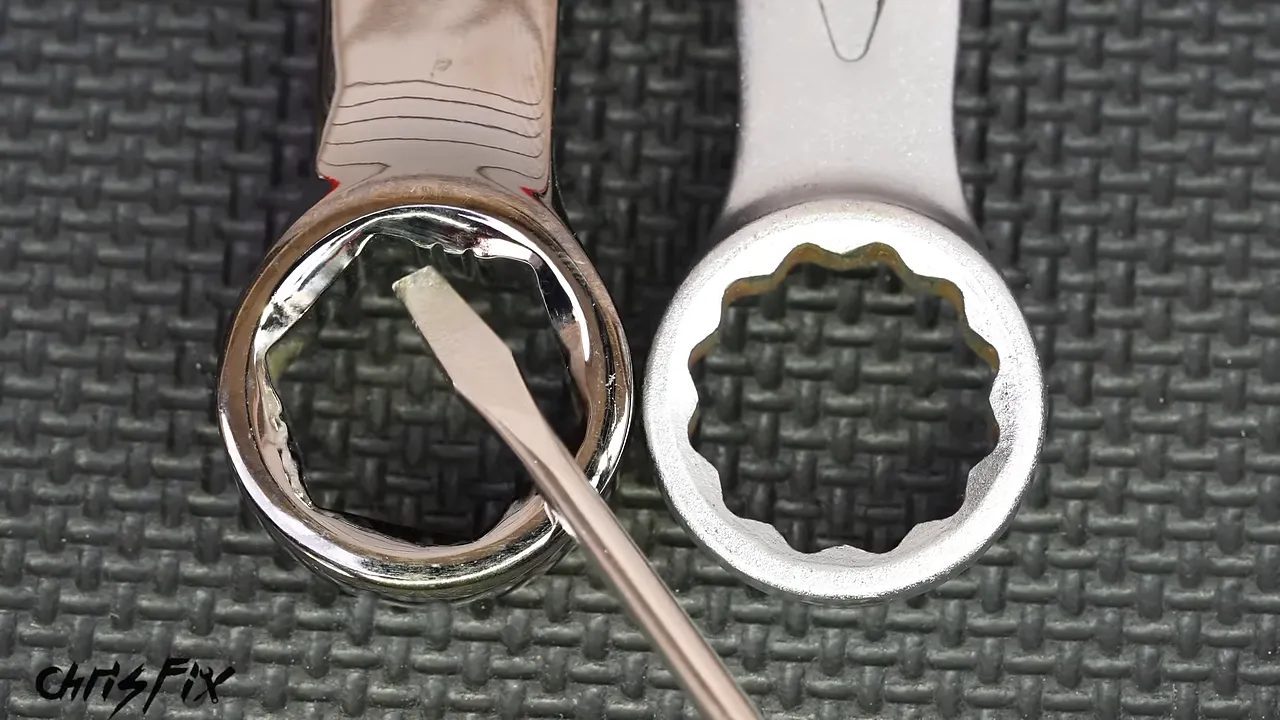
For a practical test, I deliberately rounded a rusty bolt until a normal wrench slipped. I also tried a six-point socket, seated squarely on the bolt, to confirm how damaged it was. This was a test, not a preparation step to copy on your own car.
The Overdrive box end found a grip and loosened it. Looking closely afterward, you could see where the ridges had bitten into the rounded fastener.
That impressed me. These wrenches are useful both for getting another chance at an already damaged bolt and for providing a secure grip before a fastener becomes a problem.
4. Vacuum Fluid Extractor: Less Mess During Maintenance
A vacuum fluid extractor is a tool I think anybody who regularly maintains cars will find useful. It pulls fluid through a hose into a collection container, which can make several jobs simpler and cleaner.
The model I used can generate vacuum in two ways: connect shop air from a compressor, or pump it manually. That means you do not need a compressor to use it, and it can even pull thicker fluid such as gear oil.
It includes three hoses, a pouring spout, and a thicker plastic base. The base matters because cracking is a common weak point on cheaper extractors. Its relatively low center of gravity also makes it less prone to tipping than taller designs.
Partial transmission fluid changes
On a suitable vehicle with a transmission dipstick tube, the process is straightforward:
- Remove the dipstick and feed the appropriate extraction hose down to the bottom.
- Apply vacuum to pull accessible fluid into the extractor.
- Allow the hose to keep drawing air briefly after the fluid is removed to help reduce drips.
- Measure the amount extracted and replace it with the correct transmission fluid.
- Complete the vehicle's specified fluid-level checking procedure.
During my demonstration, it extracted about two quarts per minute. That makes a partial fluid exchange quick without dropping the pan. It is not the same as replacing every bit of fluid or completing a service that requires pan removal.
Vacuum bleeding brakes
The extractor also worked for pulling old brake fluid through a bleeder valve. I needed a more flexible hose than the supplied tubing to make the connection.
With the hose fitted, open the bleeder and apply vacuum. Once that step is complete, close the bleeder while vacuum is still present to help avoid admitting air through it.
This is an example of what the tool can do, not a complete brake-bleeding procedure. Follow the correct sequence for the vehicle, use the specified brake fluid, and keep the reservoir from running dry.
Power steering reservoir fluid changes
For the Corvette's power steering reservoir, I removed the cap, fed the hose to the bottom, and applied vacuum. The old reservoir fluid came out, ready to be replaced with fresh fluid.
It is an easy way to refresh the accessible fluid without making a mess, although emptying the reservoir alone does not remove all the fluid throughout the system.
Finally, the extractor is easy to empty. Remove the adapter and use the built-in pouring spout. That sounds like a small detail, but I have another extractor that is such a pain to drain that I stopped using it.
Keep collected fluids contained and dispose of them properly. The EPA's used-oil handling guidance is a useful reference, particularly its advice not to mix used oil with other substances.
Smaller Gift: An Oil Spill Mat
An oil spill mat is not the flashiest gift here, but the first time it saves somebody's driveway, they will appreciate it.
Slide it under the work area before opening a drain plug or removing a filter. The absorbent surface catches spills, while the plastic backing helps keep them from reaching the pavement.
For my demonstration, I poured 5W-30 motor oil, gasoline, brake fluid, and coolant onto the mat. The fluids absorbed into the surface, and the underside was dry when I lifted it.
I now use one whenever I am doing this kind of work at home. It is backup protection beneath a proper drain container, not a replacement for one. Treat a contaminated mat according to the fluid involved, especially if it has absorbed flammable fuel.
5. Vyper Shop Chairs: A Premium Upgrade You Can Feel
A good rolling shop chair is a great gift for somebody who spends hours working around a car. The Vyper chairs are a premium option, and the difference is not just a nicer-looking seat.
The three models I compared were the Steel Max, Low Pro, and the newer, less expensive Steel Sport. They offer different seating configurations, but the common theme is solid construction.
There is nothing wrong with buying a budget chair. They are more affordable and can get the job done. But comparing the details makes it clear why these cost more.
Casters that roll more easily
The Vyper caster is much larger than the caster on the inexpensive chair I compared it with. Its swivel and wheel bearings feel smooth, and the wheel uses a rubberized plastic material.
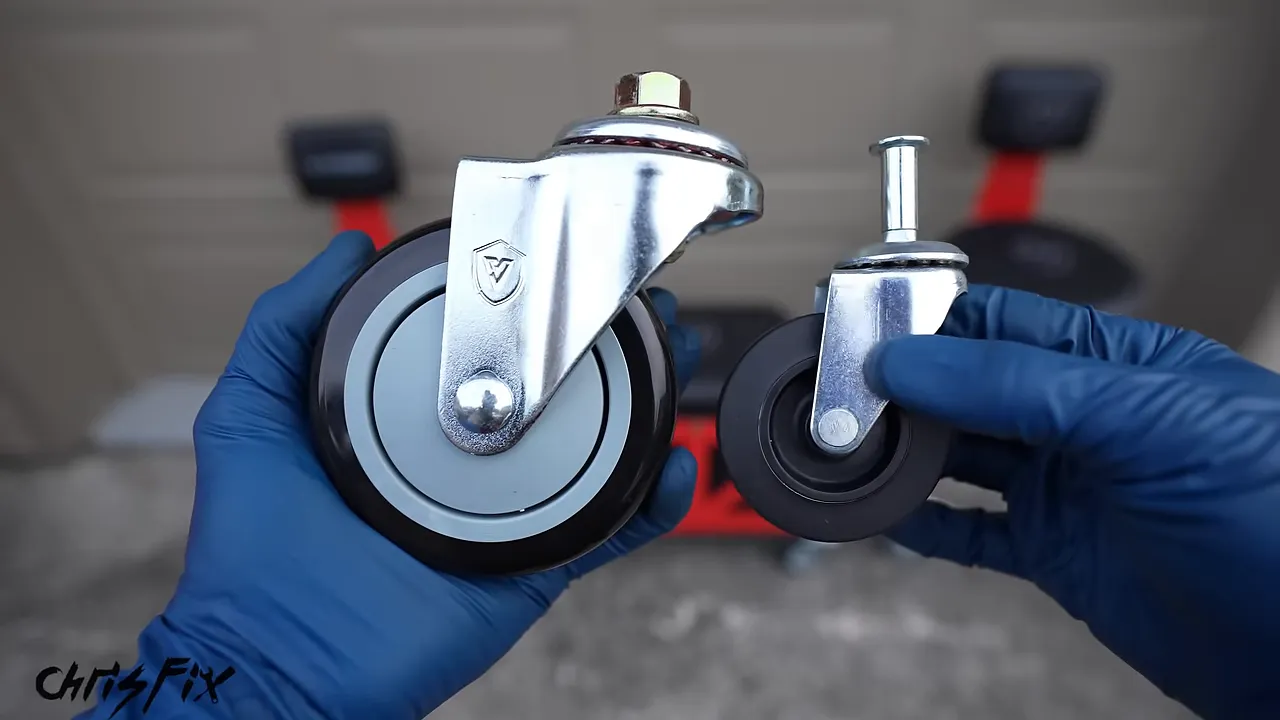
In a rolling test across rough concrete, the Vyper moved more easily. The budget chair needed another push. That is a difference you notice repeatedly when repositioning yourself around a vehicle.
The hardware also reflects the premium construction, with zinc-plated components and Grade 5 and Grade 8 fasteners.
A cushion that stays supportive
Pressing on the budget chair's thin foam, I could feel the metal underneath. The Vyper cushion was thicker and more supportive, rebounding without leaving the same indentation.
That matters when you are sitting on it for more than a few minutes. A chair should make working more comfortable, not simply keep you off the floor.
Finish and build quality
The Vyper uses a thick powder-coated finish on the metal surfaces, compared with paint on the budget chair. These chairs are made in America, and I see them as a long-term garage purchase.
If the budget allows for a splurge, this is one where you can feel where the extra money went. If not, a less expensive shop chair can still be a useful gift.
Smaller Gift: An Adjustable Oil Drain Pan
If somebody is still draining oil into an old baking tray, a better catch pan is an easy upgrade. I have used this adjustable oil drain pan for years, and its height-adjustable funnel is what makes it especially useful.
Under a taller vehicle, a normal pan sits far below the drain plug. The longer drop gives the oil more opportunity to splash or miss the target. Raising a pan on scraps of wood can help with height, but it also makes the setup less stable.
This pan uses extension tubes to bring the funnel closer to the drain. You can use the funnel at its lower position, add one tube, or add two where there is enough clearance.
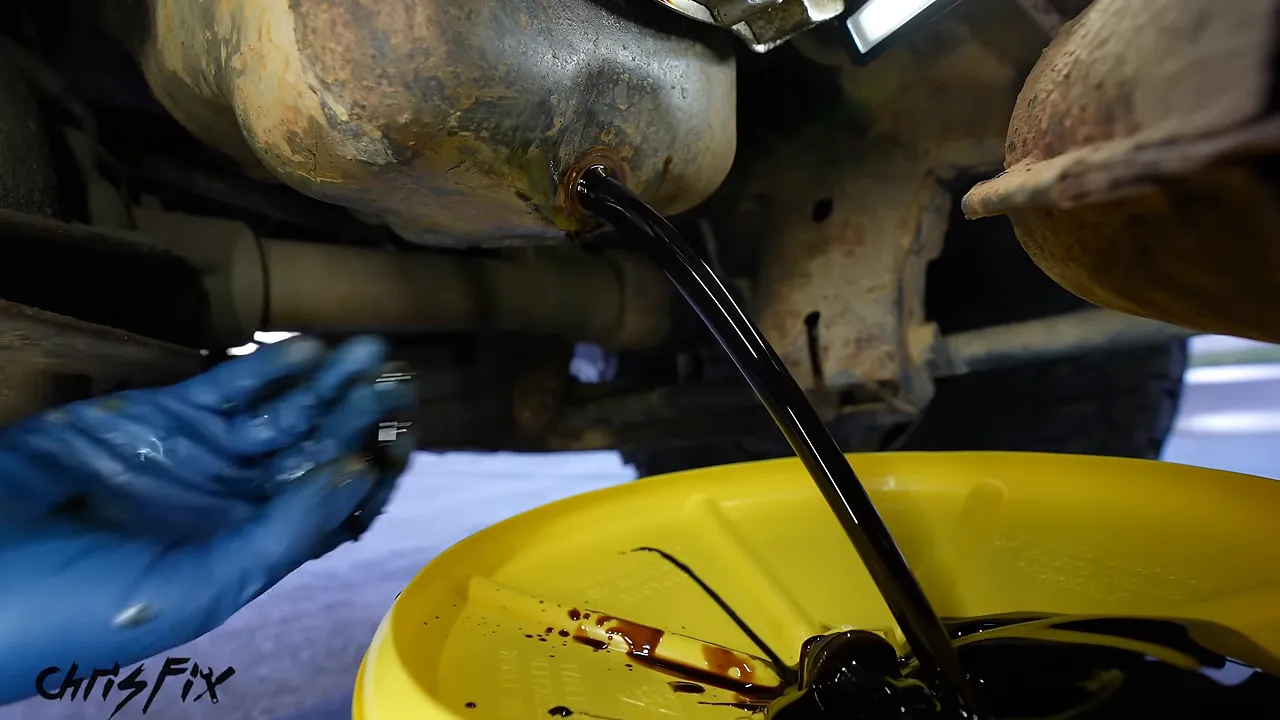
Several other features make it nicer to use:
- A broad funnel catches oil from awkwardly positioned drains and messy filters.
- A vent cap allows airflow into the container to reduce gulping and splashing.
- A grate in the funnel catches a dropped drain plug before it disappears into the container.
- A pouring outlet makes transferring used fluid into a suitable container easier.
- A tight-fitting cap seals well without the easy stripping I have experienced with some cheaper pans.
It is useful for more than engine oil. I have used it for manual and automatic transmission fluid, transfer case fluid, differential oil, and drips from filters.
For storage, the funnel snaps into the side of the pan. My main complaint is that the two extension tubes do not have their own storage location. Otherwise, it is one of my favorite catch pans because it makes routine fluid changes quicker and cleaner.
Choose the Gift That Solves Their Everyday Garage Problem
Good lighting is useful on almost every repair. Wrench extenders and gripping wrenches help when access or damaged fasteners slow you down. A thermal camera adds another way to investigate hidden problems, while fluid-handling tools make the maintenance you already do less messy.
For someone who works away from the garage, the hitch vise brings a useful piece of the workbench along. For someone who spends plenty of time in the garage, a comfortable rolling chair is an upgrade they can appreciate every time they sit down.
That is what makes a good car-tool gift: it earns its place by making the next job easier. Merry Christmas, happy Hanukkah, and happy New Year!


