Last year, our first endurance race ended after just 15 laps. The oil pressure light came on, our BMW came back on a tow truck, and a piece of the engine that definitely belonged inside the engine was now outside it.
Some of the team went to a local junkyard to pick up another engine. The rest of us started taking the car apart. By the end of the day, we had the blown engine out, but there wasn’t enough time to finish the swap and get back into the race.
We arrived with a running car and high hopes. We left pushing it into the trailer with the driveshaft hanging underneath. Not exactly the first race we had planned.
But as the finishers came through the parade afterward, we had a new goal: come back, finish the race, and drive in that parade ourselves. A year of repairs, testing, and more repairs later, the Soapy Wooder Racers returned to New Jersey Motorsports Park to find out whether our $500 BMW could actually go the distance.
Table of Contents
- A Comeback Starts Before the Green Flag
- Learning to Race With More Than 130 Cars
- The Small Failures That Can End a Big Race
- Fuel Starvation Changes the Entire Strategy
- Day One: 187 Laps and a Running Car
- Day Two: Faster Laps, Costly Mistakes, and Contact
- Passing 300 Laps Makes the Comeback Real
- A Late Crash Nearly Ends the Race
- The Checkered Flag: 346 Laps Completed
- What the Oil Analysis Revealed After 14 Hours
- What It Really Took to Finish
A Comeback Starts Before the Green Flag
Despite the name, this particular 24 Hours of Lemons weekend had 14 hours of racing: eight hours on the first day and six on the second. That was still a huge jump from the 15 laps we had managed before.
Our replacement was the junkyard engine we had picked up during that first disastrous weekend. Over the following year, we installed it and worked through the car’s common failure points to make the BMW more reliable. The process wasn’t just fixing things once. It was fixing, testing, finding another problem, and doing it again.
We also brought a little good luck. I turned the connecting rod from our old number-two piston into something Aaron could wear. He had been the unlucky driver behind the wheel when the engine let go, so it seemed only fair that he got the souvenir.
Our ambitious target was 200 laps. Our more immediate target was anything beyond 15. But the real goal stayed the same: get to the checkered flag.
Two inspections, two very different jobs
Before we could race, we had to pass two inspections:
- Technical inspection: The safety inspection determines whether the car is allowed on the track.
- BS inspection: The judges assess the $500 car claim and can assign penalty laps to help balance the competition.
We had passed tech the previous year, and we had made the car safer since then. Inspector Dale went through it thoroughly and found no problems.
Then Judge Eric checked our progress, including the junkyard engine and the reliability work. Our BMW stayed in Class A, the fast class, but we left without penalty laps. We also had an actual Soapy Wooder Racers theme this time, rather than just a silver car. Apparently, looking a little nicer wasn’t enough to get us into trouble!
The competition and the drivers’ meeting
Two familiar teams were joining the field: B is for Build with a 2004 Mercedes CLK 320, and Rich Rebuilds with a 1993 Volkswagen Jetta. They were friends, but once the race started, we absolutely wanted to beat them.
The drivers’ meeting covered track entry and exit, flags, pit speed limits, and the expectations for racing around other cars. That last part mattered. Most of our meaningful door-to-door racing experience amounted to almost nothing.
The meeting also included Alex’s Lemonade Stand Foundation, which supports childhood cancer research. The organizers explained that another $5,000 raised that weekend would bring their Lemons fundraising total to $100,000. Hearing how close they were, I couldn’t help getting involved.
Then it was time to suit up. The team chose me to start.
Learning to Race With More Than 130 Cars
We were amateurs, but getting ready to leave the garage felt like being part of a real race team. Everybody had a job: securing the driver, connecting the cool suit, setting up the radio, and making sure everything was ready before the car moved.
Our track was Thunderbolt Raceway, a 2.25-mile circuit with 12 turns and a half-mile straight. The BMW could reach about 120 mph on that straight, which also contained the finish line.
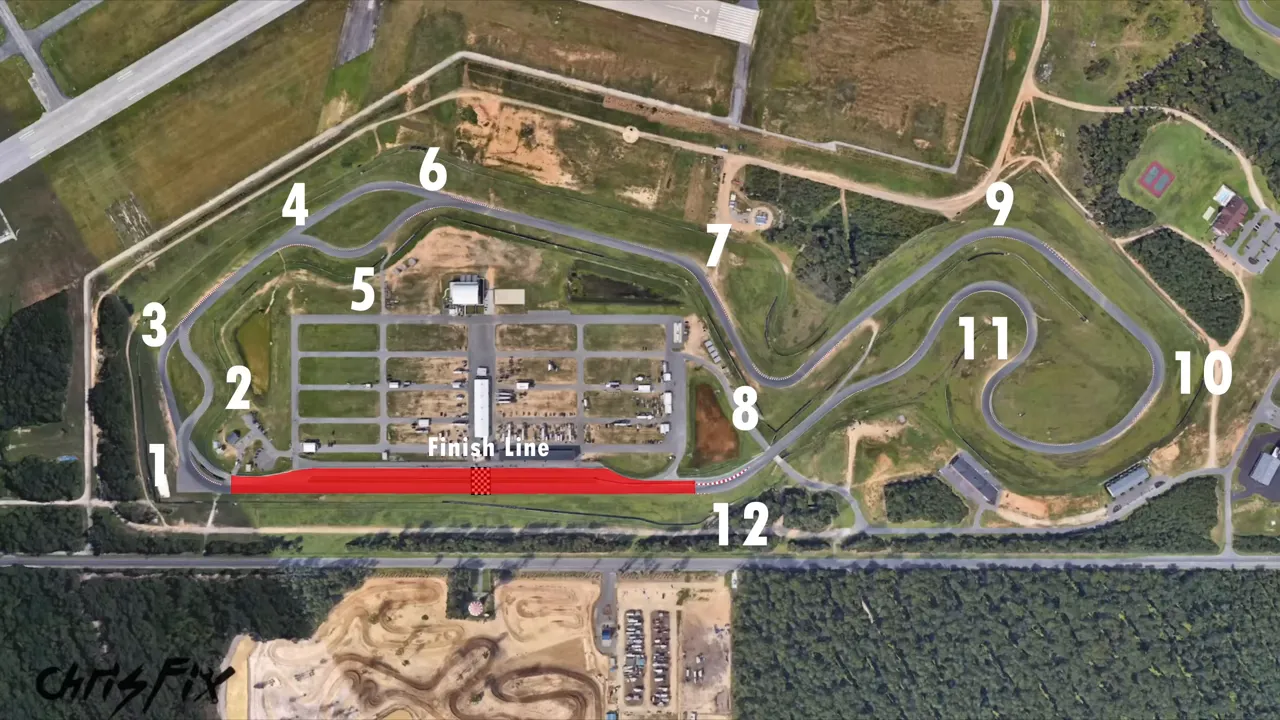
The race began with a rolling start. B is for Build was only three cars ahead when the green flag dropped, so I had a target right away.
At first, I was trying to balance three things: learning the car, bringing the tires up to temperature, and finding opportunities in traffic. With more than 130 cars circulating, a clean racing line wasn’t always available. Somebody else could take an unexpected line and leave you choosing between going off track and getting into another car.
That was the challenge: go quickly without making the one mistake that could end the whole weekend.
For the first few laps, things felt amazing. I was passing cars and getting more comfortable. Then, five laps in, the gas pedal fell off.
The Small Failures That Can End a Big Race
A broken gas pedal at 110 mph
I was traveling down the straight at about 110 mph when the pedal came loose. The plastic clip securing it to the floor had broken.
Initially, I used my left foot to hold it in place, but the loose pedal ended up behind the brake. That created a much bigger problem: pressing the brake could also apply the throttle.
I nearly shut the car off. Instead, I managed to move the loose pedal out from under the brake and limp back to the pits. That was a dangerous failure, not just an inconvenience, and it needed fixing before we could continue.
Garrett climbed into the footwell while I stayed in the seat and gave him as much room as possible. Our trackside solution used everybody’s favorite emergency tool: zip ties.
The whole unplanned stop took about six minutes. With a typical lap taking roughly two minutes, that cost us around three laps. It wasn’t ideal, but the team diagnosed the issue and got us moving again quickly.
These were improvised race repairs, not permanent repair instructions. The important point was how something as small as a plastic pedal clip could suddenly become the most important part on the car.
Confidence turns into an off-track excursion
Once I got back out, I started running repeated laps under two minutes. We went from 15 positions behind B is for Build to one position ahead, and my beginner nerves were disappearing fast.
A little too fast.
I had been chasing a Honda for a couple of laps when I thought I saw a passing opportunity. I carried too much speed, didn’t want to cut the other driver off, and stayed on the power with a terrible line. The result was a slide off the track.
At this event, putting all four tires off meant coming in for a penalty. Since it was our first offense, the officials gave me a warning and told me to drive more carefully and defensively.
Shortly afterward, B is for Build arrived for their second off-track penalty. Their punishment was more creative: a Bart Simpson-style writing assignment on the car, repeating a message 100 times.
Funny? Absolutely. But every minute spent doing that was a minute not completing laps.
A coolant tank rubbing against a pulley
After about an hour, I called for a driver change. I wanted my friends to get seat time, and I was exhausted. Repeated cornering forces, hard braking, and the concentration required to race in traffic were physically and mentally draining. I came out with a whole new respect for race drivers.
Before Garrett got in, we checked under the hood and found something that could have ended our comeback: the power steering pulley was rubbing against the coolant expansion tank.
If it wore through the tank, we could lose our coolant. If we didn’t catch that quickly enough, we could overheat and destroy the engine.
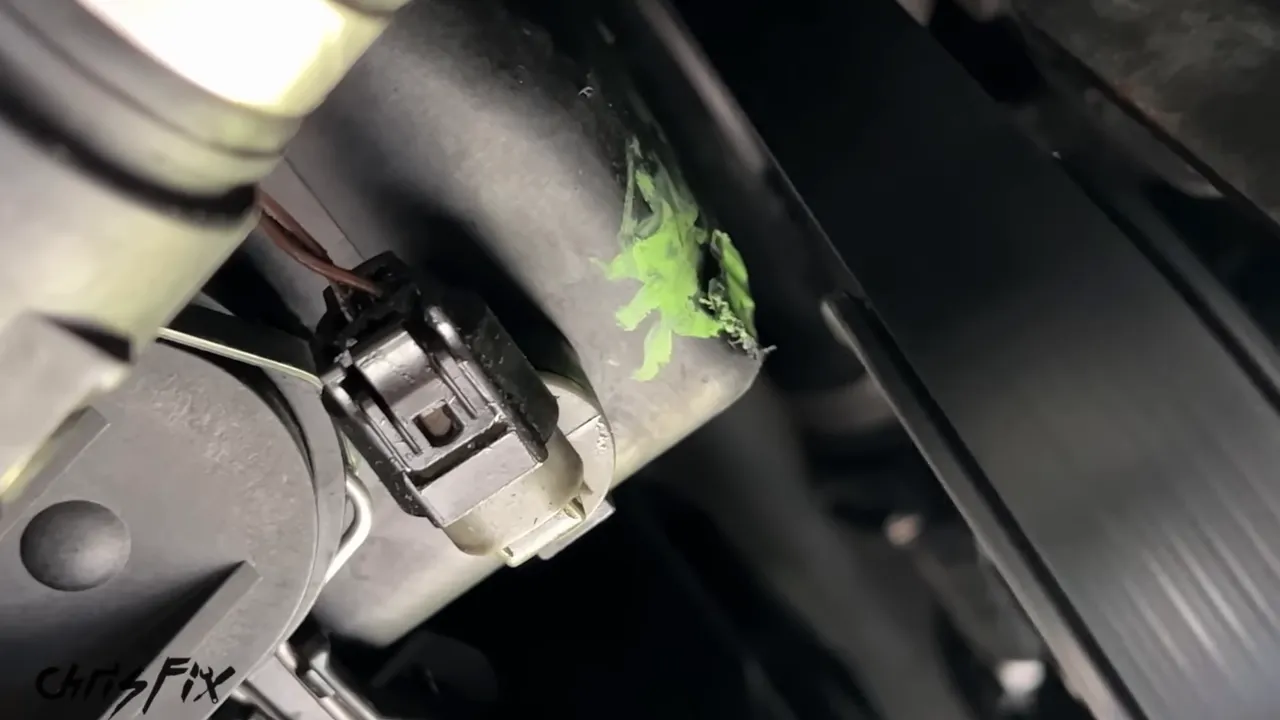
We suspected movement during high-speed turns was bringing the two parts together. Garrett worked underneath the car, pulling the radiator and expansion tank toward the front core support with zip ties to create more clearance.
The stop took more than 20 minutes, putting us roughly 10 laps behind B is for Build. That hurt, but it was better than sacrificing an engine to save pit time.
Fuel Starvation Changes the Entire Strategy
Garrett started cautiously, building confidence and learning the car. Before long, he was running consistent sub-two-minute laps and had brought us back to only one lap behind our friends in the Mercedes.
Then the engine cut out in the long left-hand turn before the straight.
After last year, hearing that over the radio was nerve-racking. Aaron suspected a fueling issue, and Garrett brought the car in to refuel. At this New Jersey event, that also meant waiting for the fuel attendant rather than filling it ourselves.
We learned that the BMW would suffer fuel starvation under hard cornering once the fuel level dropped to around half a tank.
The tank has two sections to accommodate the driveshaft underneath it. Fuel is delivered from one side, while a transfer system moves fuel across from the other. Under sustained cornering, our setup wasn’t keeping fuel available where it needed to be.
The practical workaround was simple, but costly: come in and fill up whenever the gauge reached half a tank.
That meant more fuel stops than we had planned. And our driver changes were already taking 10 to 15 minutes. We had speed on the track, but our pit work still needed a lot of practice.
During the next change, we checked that the coolant tank repair was holding and verified the lug nuts were still torqued to specification. Then Ari took over.
Rain gives our BMW a chance to recover
We were in 83rd place overall and about five laps behind B is for Build when Ari started. It was his first time racing wheel to wheel and his first time on this track. Then it began raining.
For our heavy, all-wheel-drive BMW, the wet conditions became an opportunity. Everyone’s lap times slowed, but Ari was able to use the available traction effectively and move us from 83rd to 74th.
After another half-tank stint, we refueled and put Aaron in.
This was his first time racing the car since the old engine had failed beneath him. He was also the driver most comfortable pushing a BMW hard, so this felt like a proper chance at redemption.
Aaron caught B is for Build, made the pass, and added a little breathing room before coming back in for fuel and another driver change.
Meanwhile, Rich Rebuilds was having the kind of day we knew all too well. Fueling problems and fuel leaks had kept their Jetta off the track. When they finally headed out, our whole team was excited for them. Friendly competition is fun. Spending the race repairing your car while everyone else circulates is not.
Day One: 187 Laps and a Running Car
I took another stint of about an hour and a half, getting more comfortable each lap. I was improving, but I also knew there was a big difference between figuring things out as I went and learning proper technique from a good race coach.
Garrett took the final hour. Before he left, we noticed the tires were in rough shape. We had a fresh set ready for the next day, but he needed to make the existing set last through the end of this one.
All around us, endurance racing was taking its toll. Cars were being towed in, pushed around the paddock, and worked on. Even though this was a long race, the cars were still being pushed hard every lap.
This time, ours kept going.
After eight hours, we finished the first day with:
- 187 completed laps.
- 52nd place out of 136 teams.
- A BMW that still ran and drove.
B is for Build had completed 174 laps and sat in 68th. Rich Rebuilds had managed to get some track time, too.
Compared with our 15-lap first attempt, it was an incredible improvement. Team morale was higher than ever. But we still had six hours left before we could say we had finished.
Day Two: Faster Laps, Costly Mistakes, and Contact
We inspected the car, installed the new tires, and readied the fire suppression system. Ari would start the final day.
Everybody was more comfortable now, and it showed. Ari ran consistent laps under two minutes, moved us into 49th, and set a personal best of about 1:49.1.
Then, on his final lap before the planned driver change, he hit a cone at around 115 mph.
A cone strike and an avoidable speeding penalty
The cone tore away the undertray and a fog light. Our immediate worry was whether it had also damaged coolant lines or something else underneath the car.
Ari brought it in, but the adrenaline of the race contributed to an inexcusable mistake: he drove 32 mph in an area with a 10 mph limit.
We completely agreed with the officials. People need to be safe in the paddock, and there was no justification for that speed. The penalty cost us about 20 minutes.
While Aaron got strapped in, we checked underneath. We found no visible additional damage beyond the parts lost in the cone strike, so we could continue.
A bent tie rod after contact with a Miata
Aaron went out determined to recover time. He consistently ran below 1:55 and set the team’s fastest lap of the race: 1:47.6.
Shortly after that, a Miata made contact with our front wheel. Aaron kept control and stayed on the track, but the steering alignment was slightly off.
Later, a separate crash on the straight brought the track under caution. Aaron had been out for more than an hour and a half, so we used the slower running to refuel and change drivers without losing as much ground in the standings.
When he came in, Aaron explained the steering change. We inspected the front end and found a slightly bent tie rod. The team judged the car drivable for the remaining race, and I took over.
That inspection was a decision about our car in that moment, not a general rule that damaged steering parts are safe to keep using.
Passing 300 Laps Makes the Comeback Real
During my next stint, something finally clicked. I was using more of the track, carrying more speed through corners, and passing cars that had been flying past me the previous day.
I still had plenty to learn, but the combination of the car, the traffic, and the track was starting to make sense.
Then Garrett came over the radio with two pieces of news: I had just set my best lap, 1:48.103, and our team had completed 300 laps.
Three hundred!
A year earlier, we were struggling to remove a destroyed engine while the race carried on without us. Now we had a running car, improving drivers, and enough pace to feel like a competitive team.
That feeling is what gets you hooked on endurance racing.
After about an hour and a half, I handed the car to Garrett with roughly 90 minutes left. He immediately kept the momentum going, repeatedly running below 1:55 and setting his own best lap of 1:47.9.
Everybody was getting faster. The BMW was holding together. We were so close.
Then, with about 30 minutes remaining, we had another collision.
A Late Crash Nearly Ends the Race
At the end of the straight, Garrett and another Miata made contact, sending our BMW off the track.
Our first question over the radio was whether Garrett was okay. He was. His first priority was checking on the other driver. Once he received a thumbs-up, he carefully brought the BMW back toward the pits.
From the available angles, I felt Garrett had completed the pass on the straight with room before following the expected racing line. But rather than assuming there was nothing to learn, we wanted to understand whether we could have done anything differently to avoid it.
Because there had been contact and all four tires had left the track, Garrett had to report to the penalty area.
The officials gave us advice on avoiding contact, and the stop took less than five minutes. Then we inspected the damage.
The rear wheel had red Miata paint on it and a slight bend, but we didn’t find bent suspension. The car still felt like it drove normally, so Garrett returned to the track.
At one point, we were up to 38th place. That was a very different situation from the 138th-place result of our first attempt.
With about 20 minutes left, Ari asked whether he could bring the car home. Garrett agreed, we made one final driver change, and the finish was in Ari’s hands.
The Checkered Flag: 346 Laps Completed
Those last 20 minutes were intense. We had just been reminded how quickly everything could change, and we were close enough to the finish that every lap felt huge.
When the checkered flag came out, Ari completed the lap, crossed the line, and did it: we finished our first 14-hour endurance race.
Our final result was 42nd place with 346 laps, just under 800 racing miles.
B is for Build finished 52nd with 321 laps, an impressive result for their first race. They had been ahead of us for much of the first day and made us work for it.
Rich Rebuilds finished with only 16 laps after a difficult weekend. We knew exactly how that felt, and I couldn’t wait to see their comeback.
Then we finally got the moment we had talked about a year earlier: driving our own car through the finishers’ parade.
We hadn’t won our class. We hadn’t won overall. But after everything it took to get there, finishing felt like a victory.
What the Oil Analysis Revealed After 14 Hours
Before the awards ceremony, there was one more job. With the engine still hot, I wanted to collect an oil sample and find out how the engine and lubricant had handled the race.
The dipstick showed we hadn’t used any oil over the weekend. That was encouraging for a junkyard engine, but an oil analysis could tell us more than the level alone.
Collecting the sample without draining the engine
I removed the dipstick and fed the sampling hose down into the oil pan. The collection bottle was under vacuum, so opening its valve drew oil through the hose and into the bottle.
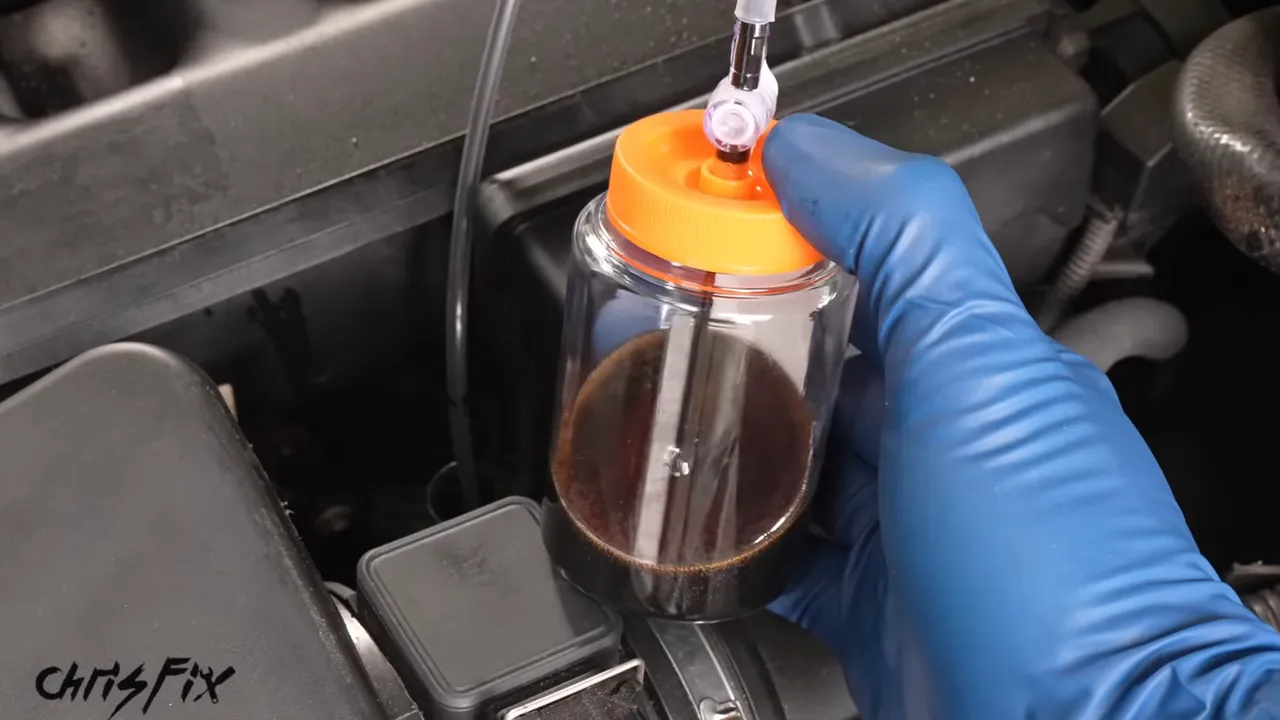
Once the bottle was nearly full, I packed it for mailing and analysis.
Contamination: no concerning results
The report gave our sample an overall score of 9.4 out of 10. The first category was contamination.
This section can help identify issues such as dirt entering the oil, coolant or water contamination, and fuel dilution. Silicon can be associated with dirt contamination, while coolant or water could point toward a leak requiring further investigation.
Our contamination results were in the green, with no concerning elevations reported.
Wear metals: encouraging news for the bearings
Next were wear metals. Copper, lead, and tin can provide clues about bearing wear, which was particularly important after our previous engine failure.
These results looked good, too. The report didn’t show the elevated wear-metal readings we were worried about.
Oil condition: viscosity was too low
The one problem was the oil itself. After the race, its viscosity was below the acceptable range for our 10W-60 oil.
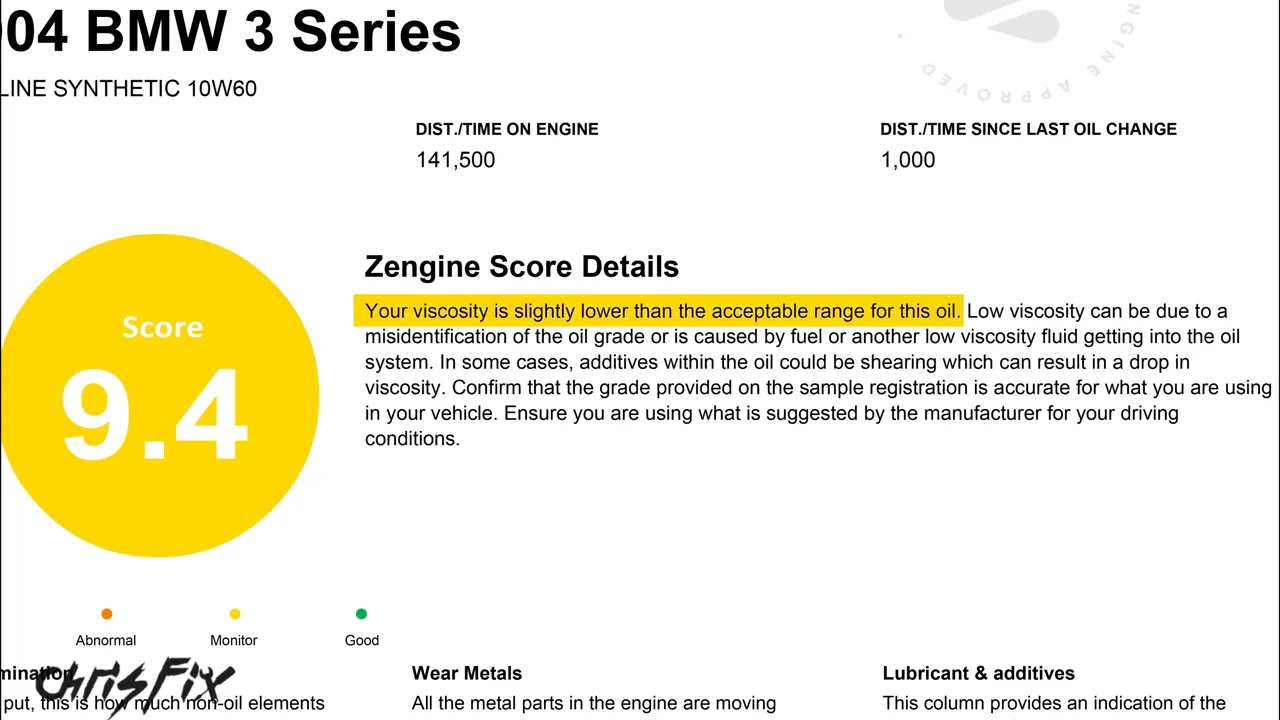
The analysis attributed that to oil shearing during extended high-RPM, high-temperature operation. In simple terms, the long molecular chains involved in maintaining viscosity can break down into shorter ones, leaving the oil thinner than intended.
That matters because reduced viscosity can increase engine wear. The engine had survived, but the report showed us a way to improve our preparation before the next race: try a different oil brand and compare the results.
A running engine doesn’t tell the whole story. Taking the sample gave us useful information we wouldn’t have had just from celebrating at the finish line.
What It Really Took to Finish
The overall and Class A winner was a 1991 BMW 318i with 414 laps. Class B went to a 1988 Ford Thunderbird with 407 laps, and Class C went to a 1982 Dodge Omni with 384 laps.
We didn’t collect an award, but we came away knowing exactly how much had changed. Our comeback took more than a replacement engine:
- Repeated testing: A year of finding and fixing problems gave the BMW a chance to survive.
- Attentive inspections: Catching the coolant tank rubbing against the pulley may have saved the engine.
- Adaptable strategy: Fuel starvation forced half-tank stops, and a caution gave us a better opportunity to pit.
- Teamwork: Drivers, radio communication, repairs, and safety checks all mattered.
- Learning from mistakes: Off-track excursions, slow driver changes, and a paddock speeding penalty showed us where we still needed work.
Last year, we pushed the BMW into the trailer. This year, it drove in under its own power after 346 racing laps.
That was our win.
If you fail badly at something you really want to do, learn from it and come back better prepared. Getting to that finish line with my friends made every hour of work worth it.


